Lesson at a Glance: Lady Gaga’s The Dead Dance (Wednesday)
- Media / Artist: Lady Gaga
- Target Level: B1
- Duration: 60 minutes
- Language Activation Focus: will / won’t (Determination and Refusal)
- Key Outcome: Students will employ will/won’t to propose narrative outcomes, mediate meaning through an evidence-based debate, and generate creative written output.
- Materials: Genially Presentation, Instructions.pdf
Have you ever looked at a gap-fill worksheet and felt your own energy drain away? Don’t you wish you could tap into the TRUE power and soul of a popular song in your classroom?
This Lady Gaga lesson plan is your key. It offers a framework for creative song activities for the ESL classroom that transforms passive listening into an act of pure creation. Forget just hunting for missing words! Here, your students will become storytellers, dive deep into powerful metaphors, and connect with the song’s universal themes, building their critical 21st-century skills in a way that feels absolutely electric.
If you have been searching for a meaningful, low-prep way to bring popular music to life, this is your invitation. It’s designed to spark genuine communication and profound thinking in your teen and adult learners. This isn’t just another worksheet—it’s a gateway to a deeper, more vibrant connection in your classroom.
Why This Lesson Works: The BEAT+ Method in Action
There’s a reason this lesson feels different. A reason it just… works.
It’s all built around a philosophy I call the BEAT+ Method. My goal was to move our students beyond listening as a test—you know, where they’re just passively waiting to catch a word? This method turns that on its head. It’s about listening in order to create something new. That shift in purpose is EVERYTHING, and it keeps the energy high from start to finish.
Your role shifts, too. You become less of a tester and more of a guide, watching your students unlock their own creativity, think more deeply, and truly talk with one another. Because when they connect language to an experience—to a story they built or a debate they felt passionate about—that’s when the learning becomes real. It sticks. And that shared feeling of connection is what makes the whole thing so rewarding.
Lesson Snapshot
- Language level: B1 and above
- Learner type: Teens and Adults
- Primary Skill: Writing (creative writing, personal reflection)
- Secondary Skills: Speaking (prediction, discussion, debate), Listening (gist & comparison), Reading (lyrical analysis)
- Topic: Narrative and Storytelling, Figurative Language (Metaphors), Power Dynamics, Determination and Refusal
- Grammar Focus: Using
will/I'llfor determination andwon'tfor refusal. - Materials: Genially Presentation
- Duration: Approximately 60 minutes
Objectives of this ESL Song Lesson Plan
- Language Analysis and Proficiency: Develop proficiency by analyzing figurative language (metaphors) and mastering the grammatical use of
willandwon'tto express determination and refusal. - Integrated Communication Skills: Enhance communicative skills by integrating listening (for comparison), speaking (in predictions and debates), reading (for lyrical analysis), and writing (for creative application).
- Critical and Creative Engagement: Foster higher-order thinking by critically analyzing the song’s narrative to support an argument and creatively applying target language from a new perspective.
Step-by-Step ESL Lesson Plan for “The Dead Dance”
Follow these steps from my MUSIC+ Framework to guide your students through a memorable and effective lesson.
Step 1 (7 min): Warm-up: Thematic Prediction
Divide students into pairs.
Show them three evocative images and a list of 10 keywords related to the song (slide 1 of the genially presentation).
Instruct pairs to discuss and make predictions based on the prompts:
- What is the mood of this story?
- Who is the main character?
- What do you predict will happen?
Bring the class together and have a few pairs share their predictions with the group.
TIPS & SUGGESTIONS: This initial step sparks curiosity and activates students’ prior knowledge. By investing in their own predictions, they become more engaged and motivated to discover the song’s actual story.
Step 2 (8 min): Narrative Scaffolding
Place students in small groups. Instruct them to use the same images, keywords, and their predictions from Step 1 to create a short story with a clear beginning, middle, and end.
After they have formulated their story, ask each group to share a one-sentence summary with the class.
TIPS & SUGGESTIONS: This activity provides students with a narrative framework, or schema, which primes them for better comprehension during the listening stage.
Step 3 (8 min): Compare Stories Through Listening
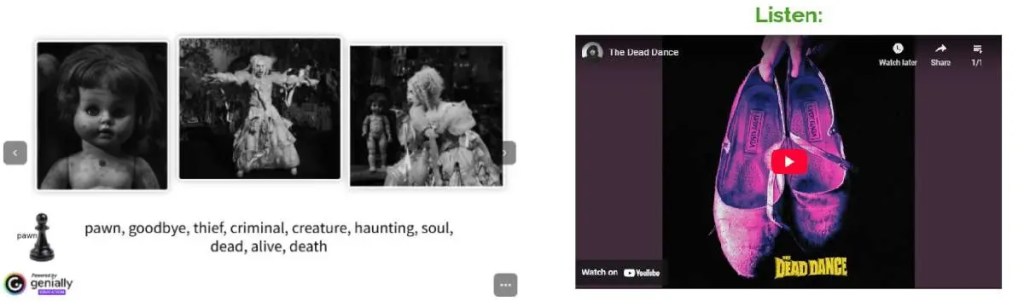
Tell students they will now listen to the song “The Dead Dance.”
Play the song once. Their task is to listen and compare their group’s story to the narrative in the lyrics.
After listening, facilitate a brief whole-class discussion with the questions:
- What was similar between your story and the song?
- What was different?
TIPS & SUGGESTIONS: This activity provides students with a narrative framework, or schema, which primes them for better comprehension during the listening stage.
Step 4 (10 min): Figurative Language Analysis
Put students back into pairs. Provide them with a worksheet or display a slide with a multiple-choice activity focusing on key metaphors from the song:
- “You killed my queen with just one pawn.”
a) You destroyed my most important hope with a small, insignificant action.
b) You literally won a game of chess against me.
c) You made my best friend angry with me.
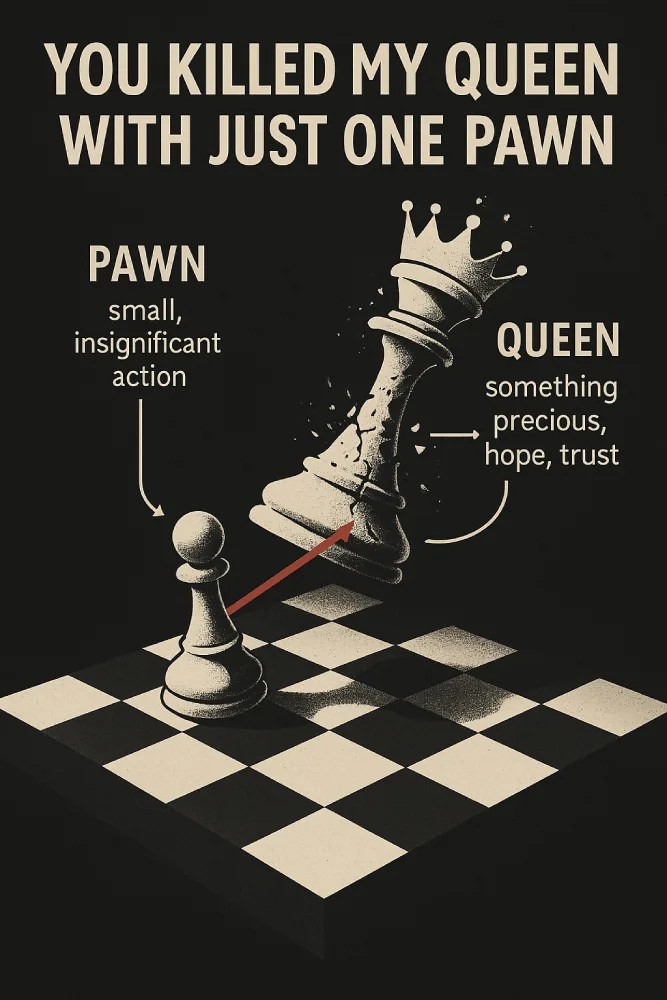
✅ Correct: (a) — The queen = something precious; pawn = small action → big damage.
- “Like a thief in my head, you criminal.”
a) Someone physically stole from her.
b) Someone took away her thoughts or peace of mind.
c) Someone broke into her house.
✅ Correct: (b) — Suggests mental/emotional theft rather than literal crime.
- “You’ve created a creature of the night.”
a) She literally turned into a vampire.
b) She feels transformed into a darker, stronger version of herself.
c) She now enjoys going out at night.
✅ Correct: (b) — Emphasizes rebirth through pain, a powerful metaphor for resilience.
Ask pairs to discuss and choose the best meaning for each phrase.
Review the answers as a whole class, discussing the imagery and intended meaning of each metaphor.
Step 5 (10 min): Grammar Discovery: Will/Won’t
Discover (Individual): Give students the full lyrics and ask them to individually read and highlight all instances of I'll, will, and won't.
Classify (Pairs): In pairs, students classify each highlighted example, labeling it as an expression of determination (a strong promise or intention) or refusal (a strong “no”).
Transform (Pairs → Whole Class): Instruct pairs to choose two sentences from the lyrics and “flip” them (e.g., change I'll keep on dancing to I won't keep on dancing). Discuss as a class how this transformation changes the singer’s message and tone.
TIPS & SUGGESTIONS: This guided discovery approach allows students to notice, analyze, and manipulate the target grammar in its authentic context, leading to a more profound understanding than a simple rule presentation.
Step 6 (10 min): Textual Evidence Debate
Organize students into small groups for a debate.
Pose the debate question: “Who has more power in this story—the singer or the criminal?”
Instruct groups that they must support their arguments by citing at least one specific line or phrase from the lyrics as evidence.
Allow time for discussion, then have groups share and defend their conclusions with the class.
Step 7 (7 min): Creative Perspective Shift
Tell students they will now write from the perspective of the “criminal” in the song.
Task (Individual): Write four new lines of lyrics from the criminal’s point of view. The new lyrics must use will or won't at least once to show their promises or refusals.
Have students share their creative lines with a partner.
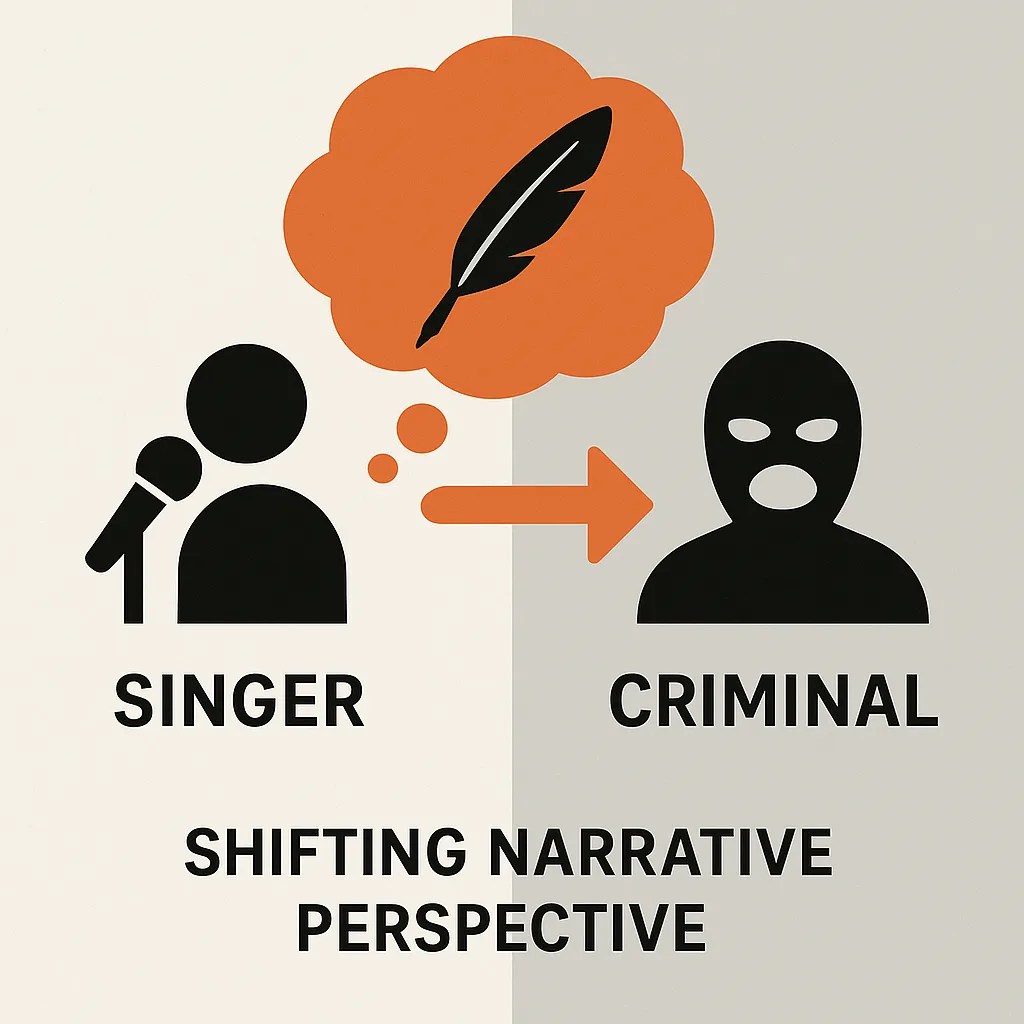
TIPS & SUGGESTIONS: This task provides focused creative practice. It recycles the target grammar and encourages transformation by having students adopt a different narrative perspective
Step 8 (2 min): Reflection & Wrap-Up
As an exit ticket, ask students to complete the following task individually on a small piece of paper or in a chat box.
Task: “Write one personal promise inspired by the song, starting with I will… or I won’t…“
TIPS & SUGGESTIONS: This final step personalizes the lesson, making the language and themes memorable and providing students with a resonant takeaway from the class.
Teacher’s Guide: Explaining the Metaphors
Here are simple explanations to help you guide students through the figurative language.
- “You killed my queen with just one pawn.”
- Explanation: This uses chess imagery. The “queen” is something precious (love, trust), and the “pawn” is a seemingly small act of betrayal. The adversary destroyed something valuable with a surprisingly minor or treacherous move.
- “Like a thief in my head, you criminal.”
- Explanation: This simile compares the person to a thief inside the singer’s mind. Their memory is intrusive and unwanted, stealing her peace.
- “You’ve created a creature of the night.”
- Explanation: This metaphor suggests the adversary’s actions have transformed the singer into someone dark, vengeful, or changed, who has lost her former self.
Frequently Asked Questions (FAQ) Section
How does this lesson teach grammar without a boring chart?
This lesson uses a “guided discovery” approach. Students find examples of will and won't in the actual song lyrics first (Step 5), discuss their meaning in context, and then use them creatively. This makes the grammar more memorable than just seeing rules on a worksheet.
What speaking skills does this creative song activity practice?
This lesson is packed with speaking practice. Students make predictions (Step 1), engage in collaborative storytelling (Step 2), discuss literary devices (Step 4), and participate in a persuasive debate using textual evidence (Step 6).
Is this lesson suitable for intermediate B1 ESL students?
Yes, it’s perfect for B1 students and easily adaptable for B2. The activities are scaffolded, starting with simple predictions and building to a more complex debate. The grammar focus on
will/won't for determination and refusal is also a key competency at the B1 level.
Why is a debate included in a music lesson?
The debate (Step 6) is a powerful way to develop critical thinking and communication skills. It pushes students beyond simple comprehension and requires them to analyze lyrics, form an opinion, and defend it with evidence—a crucial skill for academic and real-world success.
How can I adapt this lesson if I’m short on time?
If you have less than 60 minutes, you can combine the prediction and storytelling steps (Steps 1 & 2). You could also make the final creative writing task (Step 7) a paired activity instead of individual to save time.
What if my students struggle with metaphors?
The lesson is designed to support them. Step 4 uses a multiple-choice format to guide students toward the correct interpretation of the figurative language. This provides a scaffold, making abstract concepts more accessible before a whole-class discussion.
Can I use this lesson framework with other songs?
Absolutely. This example use of the MUSIC+ Framework (Prediction > Storytelling > Comparison > Analysis > Creation) is designed to be a flexible template. You can apply this same step-by-step journey to any song that tells a story, making your lesson planning faster and more effective.
Author Bio:
About the Author:Márcia Bonfim is an ESL/EFL teacher and creator of the Song Activity Factory. She helps educators create engaging lessons using her signature BEAT+ Method, which features the MUSIC+ Framework. You can discover her complete methodology summary here.

