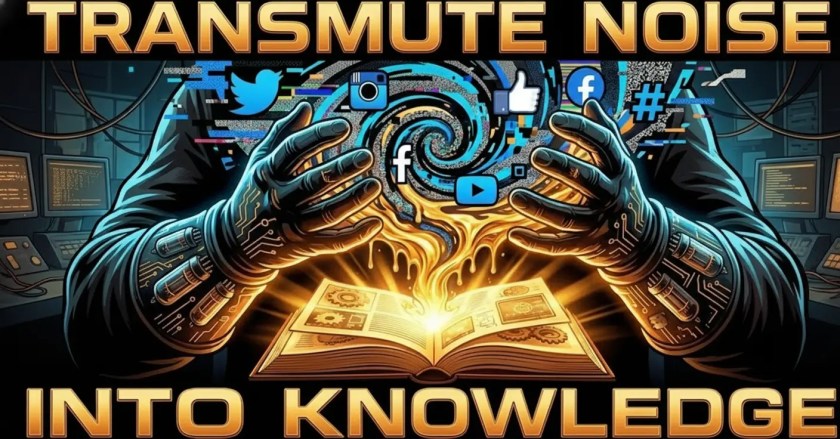
Strategy Insights: Pop CLIL — Transmuting Noise into Knowledge
- Main Concept: The evolution into Pop CLIL (Content and Language Integrated Learning), using the vibration of pop culture to teach subjects like Natural Sciences, History, and Math.
- Key Framework: The MUSIC+ Framework (Motivation+, Understanding+, Skills+, Interaction+, Creativity+) applied to academic subject integration.
- Teacher Benefit: Eliminates “assessment anxiety” by providing a complete ecosystem of summative rubrics and formative checklists that bridge the gap between magic and measurable results.
- Practical Application: Using a “visual inquiry engine” to map Chemistry (immiscible liquids) and Physics (momentum/impact) onto song metaphors to create creative “Hazard Warning” labels.
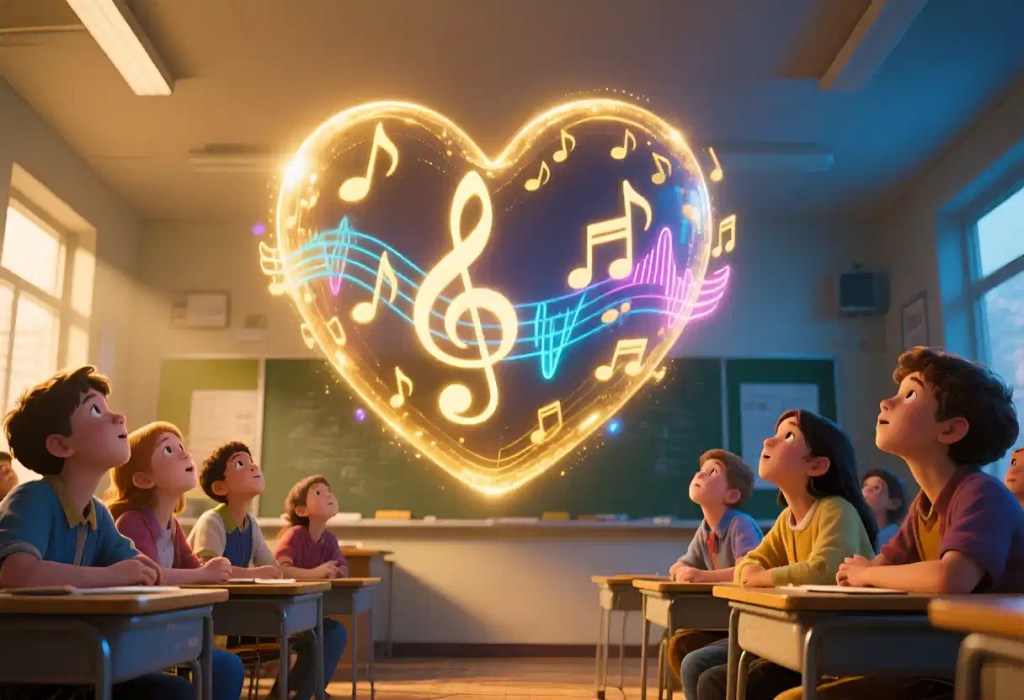
For years, we have walked this path together with a shared, deep belief: that music is not merely a break from learning, but the very HEARTBEAT of it. We have filled the gaps, we have sung the choruses, and we have brought JOY back into the classroom.
But let’s pause for a moment… can you feel the shift?
The world is changing. The “noise” of pop culture is louder than ever before. Our students are swimming in a flood of images, videos, and endless scrolling. It touches their minds, but does it touch their souls? It can feel overwhelming, can’t it?
However, as educators — as alchemists of the classroom — we have a choice. We can fight this noise… or we can TRANSMUTE it.
Welcome to the New Era of the Song Activity Factory.
Starting now, we are evolving. We are expanding our vision to become not just a resource site, but a source of light and innovation. My new mantra is simple: We don’t just teach English with songs; we transmute noise into KNOWLEDGE.
We are taking the lead of modern distraction and turning it into the GOLD of deep, structured, and measurable learning. Everything is energy, and we are redirecting that energy toward something incredible.
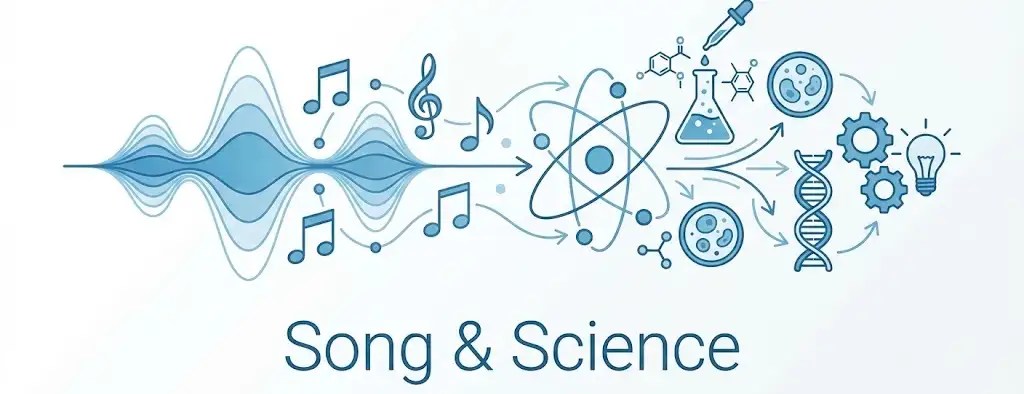
This means we are expanding beyond standard language lessons into Pop CLIL— using the vibration of pop culture as a bridge to teach academic subjects like History, Science, Math, and Social Studies.

Imagine teaching Physics through Miley Cyrus. Imagine teaching History through Coldplay. It sounds impossible, but it is the future of engagement. It is speaking the language of your students’ world to help them understand the wider universe.
So, what does this look like in practice?
I didn’t want to just tell you about this alchemy; I wanted to show you. Below is a complete, ready-to-teach Pop CLIL Lesson that uses a massive club hit to teach Natural Sciences.
Come with me on this new journey. Let’s turn the volume up on learning!
Lesson Overview: Elemental Forces & Chemical Reactions
Lesson Description
This is an energetic, visually grounded lesson that uses the vivid metaphors in “Gone Gone Gone” to teach basic Natural Science concepts. Students will explore “Elemental Forces” (Fire, Water, Reactions) to understand how we describe compatibility and danger.
Why It Works: This lesson uses strong scientific visuals to make abstract feelings concrete. It follows the standard flow your students love, but it integrates a “visual inquiry” engine to boost engagement and deepen comprehension naturally.
Details
- Language level: A2 (Elementary)
- Learner type: Teens
- Academic Subject (CLIL): Natural Sciences (Elements & Reactions)
- Song: “Gone Gone Gone” by David Guetta, Teddy Swims & Tones and I
- Duration: 50-60 minutes
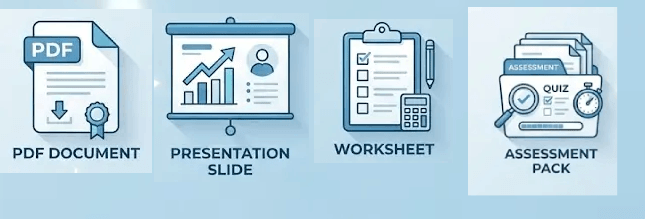
- Materials: PDF instructions with links to (Google Slides, Worksheet, Assessment Pack).
👁️ The Vision: The Student’s Journey
1. The Hook: A Law of Nature We start with a question, not about grammar, but about LIFE: “Do these mix?” Students face arresting images—oil on water, a moth circling a flame. We ask about physics and instinct. The lesson begins with a universal truth: some forces are meant to clash.
2. The Field Study: Mapping the Collision Then, the music takes over. They listen to “Gone Gone Gone” with a clear, simple task: number the pictures (wall, flame, oil, eye) as they hear them. They aren’t analyzing yet; they are simply tracing the arc of a relationship hurtling toward impact.
3. The Vocabulary Lab: Classifying Elements Now, they become scientists! They sort words into Nature, Actions, and Feelings. They discover the rhymes and land on the core metaphor: like oil in the ocean. They learn that some things, no matter how close, are destined to remain apart.
4. Lab Partners: Connecting Science to Song In pairs, they connect the dots. They match cold, hard science facts to the lyrical phrases. Physics explains the crash; chemistry explains the separation. Through discussion, they see the song for what it truly is: a case study in emotional chemistry.
5. The Creative Warning: Issuing the Alert Finally, it’s time for ACTION! They create a hazard label for this toxic love—designing a danger sign or writing a text to save the moth. They aren’t just presenting work; they are posting a warning from the edge of feeling. They leave as emotional chemists, knowing exactly how to label what cannot mix!
Step-by-Step Pop CLIL Lesson Plan
Step 1 – The Lab Experiment – Motivation+ (10 min)
First, display two images side-by-side (slide 1). One image shows oil floating on water, and the other shows a moth flying into a candle flame. Ask about the oil and water: “Do they mix? Are they friends?” Then, ask about the moth and fire: “Is this safe or dangerous?” Introduce the lesson by saying: “Today, we will explore the science of danger. We’ll see how some things just don’t mix well.”
Step 2 – The Field Study – Understanding+ (10 min)
Play the song “Gone Gone Gone” for the class (slide 2). Next, distribute a worksheet featuring four images (or use slide 3): a wall, a flame, oil, and an eye. Tell students to “listen to the song. Number the pictures in the order you hear them.”
The Lyric Sequence:
- “We were fire…” (Line 1)
- “Like oil in the ocean…” (Line 2)
- “…eyes closed in the dark” (Line 3)
- “Headed for a wall…” (Line 4)
Step 3 – Nature Vocab – Skills+ (15 min)
Hand out the worksheet with the song lyrics with the exercises to each student. Explain that they are scientists today, and their task is to sort words from the song into the correct categories:
- Nature Things: Fire, Oil, Ocean, Flame
- Actions: Run, Scream, Drive
- Feelings: Madness, Pain, Love
As they work, clarify key vocabulary:
- Tame: To stop something from being wild or out of control.
- Flame: The hot, bright part of a fire.
- Mark: A scratch or scar left after hitting something.
Focus on the line “Like oil in the ocean.” Explain that in science, oil stays on top and doesn’t mix deeply with water. Then, ask: “Do the two people in the song feel connected or separated, like oil and water?”
Step 4 – The Lab Partners – Interaction+ (10 min)
Divide students into pairs for a collaborative activity in part C of the worksheet. Part C – The Lab Partners – Work in pairs. Read the science facts. Find the matching lyrics in the song and write what they mean.
- (1) FACT 1 (Physics): “A fast object cannot stop easily. It will hit the wall hard.”
Matches Lyric: __________________________________________________________
Meaning: _______________________________________________________________ - (2) FACT 2 (Chemistry): “Oil and water are different. They never mix. They always stay apart.”
Matches Lyric: __________________________________________________________
Meaning: _______________________________________________________________ - (3) FACT 3 (Biology): “Some insects love the light. They fly to the fire, but the fire burns them.”
Matches Lyric: __________________________________________________________
Meaning: _______________________________________________________________
Encourage pairs to discuss the meaning of each match together, ensuring both partners understand the connection.
Step 5 – The Hazard Sign – Creativity+ (15 min)
Explain to students that the relationship in the song is “toxic” and needs a warning label. Offer students a choice of one creative task:
- Option A (The Sign): Draw a yellow warning triangle. Inside, draw the moth and fire. Write a short warning: “Danger: Too Hot.”
- Option B (The Bottle): Draw a bottle labeled “Love.” List the ingredients inside, such as: “50% Fire, 50% Pain.”
- Option C (The Message): Write a short text message to the moth, advising it: “Stop! Don’t go to the light. It will hurt you.”
Allow students time to complete their chosen creative response. Invite a few volunteers to share their warning signs, bottles, or messages with the class, celebrating their creative interpretations.
The Question That Causes ‘Assessment Anxiety’: How Do You Grade Magic?
This is the shadow that often looms over creativity, isn’t it? You’ve just facilitated a beautiful, electric lesson about Science and Metaphor. The energy in the room is palpable. But then comes the cold reality: How do I measure this?
I have solved this. This is my core mission. I believe that transformative teaching must be paired with soulful, systematic assessment.
We do not have to choose between creativity and clarity. We can have both.
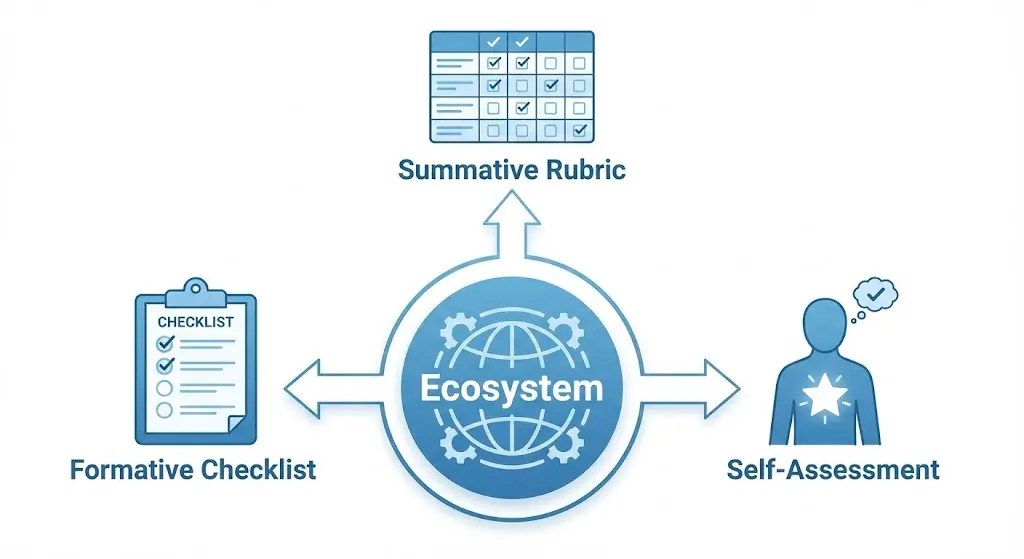
For every lesson I create—especially these new Pop CLIL experiences—a complete assessment ecosystem is designed to support you. For this “Gone Gone Gone” lesson, your toolkit includes:
- The Summative Rubric: A crystal-clear grading tool for the final creative task (The Hazard Sign), measuring “Interpreting Metaphors” alongside “Language Use.” It ensures your grading is fair, transparent, and defensible.
- The “Pair Share” Checklist: A formative tool to track the energy of participation and understanding during the “Lab Partners” discussion (Step 4).
- Student Self-Assessment: A simple “I Can” checklist where students connect with their own progress and rate their understanding of the song’s scientific metaphors.
It gives you the peace of mind to grade this meaningful work with clarity and fairness, finally silencing that “assessment anxiety.”
Your Next Step: Join the Evolution
You do not have to invent these tools from scratch. You do not have to walk this path alone. I want you to feel this sense of confidence and flow in your own classroom immediately.
Everything is here, ready for your command.
P.S. Want More Alchemy?
This is just a taste of the abundance to come. Starting December, the Exclusive Subscriber Club evolves into something spectacular. We are turning up the volume. Members will receive 10 new packs of light every single month:
- 5 Enhanced Song Lessons (The Classic Style you love)
- 5 NEW Pop CLIL Lessons (Bridging music to academic subjects like Physics, History, & Biology)
[Click Here to Unlock the Full Library & Get the New Packs]
Let’s turn the noise into knowledge.
Namaste,
Márcia Bonfim
Author Bio:
About the Author:Márcia Bonfim is an ESL/EFL teacher and creator of the Song Activity Factory. She helps educators create engaging lessons using her signature BEAT+ Method, which features the MUSIC+ Framework. You can discover her complete methodology summary here.
 Song Activity Factory