Lesson at a Glance: Unreal Present with Bebe Rexha
- Media / Artist: “I Like You Better Than Me” by Bebe Rexha
- Framework: BEAT+ Method and MUSIC+ Framework
- Target Level: B2
- Duration: 60 min
- Language Focus: ESL Song Lesson Plan (Unreal Present: Wish + Past Simple / Could)
- Key Outcome: Analyze digital comparison and toxic positivity, employ the Unreal Present to express dissatisfaction, and mediate complex meanings via specific discourse roles.
- Materials: Google Slides, Student Worksheet, Lyric Sheet Cut Out, Assessment Pack
When Unreal Present Drills Feel Fake
You walk into a B2 class and present a textbook drill on the Unreal Present. You ask students to use “I wish” to share their regrets. Instead, they stare back in polite discomfort, offering robotic, generic answers.
Robotic output in a B2 classroom is never a language problem. It’s a task design failure.
The primary source of this difficulty is forced personal relevance without context. Traditional materials demand that students manufacture vulnerability on the spot about hypothetical situations.
These low-stakes tasks feel intrusive and meaningless. This creates no real communicative pressure, making the task intellectually empty.
The Real Reason Regrets Feel Hard to Teach
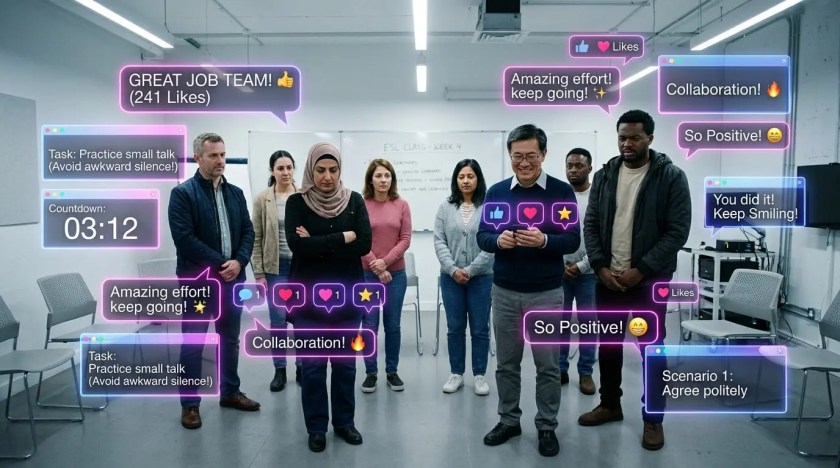
You spend hours fighting planning fatigue to build a seamless grammar presentation. Yet, the energy evaporates instantly when the practice begins. It is incredibly easy to internalize this hesitation as a personal failure.
Traditional materials force students to manufacture regret on demand, with no real consequences. The task fails because the system allows it to fail.
To bypass this friction, we use “I Like You Better Than Me” by Bebe Rexha. It reframes the Unreal Present into a high-stakes narrative system against toxic positivity.
The lyrics expose the gap between digital illusion and real insecurity, creating immediate psychological tension.
The target language only emerges because of that specific tension. Without the song, the task would lose its power entirely. This is a song-driven learning system, not a standard lesson with a song added.
Inside the Digital Comment Section
The execution begins conceptually by asking students to judge an influencer’s toxic positivity post.
The task escalates as they discuss and defend their choices.
When the audio plays, students lean in closely. Not because the melody is catchy—but because they spot the grammatical mismatch between formal advice and raw reality. That is the turning point.
Students are forced to perform a linguistic audit. They listen and correct a robotic formal transcript into the exact emotional “I wish” and past tense verbs heard on the track.
This creates a moment where learners translate digital illusions into grammatical facts. Finally, they synthesize their debate into a four-sentence digital clapback or supportive DM.

The Invisible Mechanism of Digital Mediation
The secret engine driving this lesson is Controlled Autonomy. This is a structured, repeatable system built on the MUSIC+ Framework.
We isolate learners into a digital comment section with strategic discourse roles. The Challenger anchors theories in Unreal Present syntax. The Moderator ensures the group uses specific semantic phrases like “toxic positivity.”
This mechanism forces complex mediation under pressure. It stabilizes their hypothetical reasoning because they must deploy target syntax to challenge their peers’ interpretations of digital illusions. Without this structured pressure, the task collapses into generic agreement.
Assessment With a Soul & Institutional Rigor
We evaluate their work using a mathematical constraint-based micro-writing system. Students must write exactly four sentences using the target Unreal Present grammar and one semantic board phrase.
This guarantees Assessment with a Soul. The grammar emerges naturally, completely removing the need for heavy correction.
To satisfy institutional demands, we deploy an Extended Portfolio homework module. Students expand their short in-class digital clapback into a 150-word narrative entry.
The rigor is preserved. The cognitive load is redistributed.
Access the Complete Lesson Assets
When you use authentic media, engagement stops being something you have to force. You don’t need to build this from scratch, either. I’ve mapped out this complete 60-minute lesson.
About the Author
Márcia Bonfim is an ESL/EFL teacher and the creator of Song Activity Factory. She helps educators design cognitively engaging lessons using her signature BEAT+ Method, built around the MUSIC+ Framework. Her work focuses on transforming songs from “fun extras” into structured learning systems that develop real communicative performance at higher levels. 👉 You can explore a full overview of her methodology here

