Lesson at a Glance: Times of My Life by MGK (BEAT+ Method)
- Media / Artist: MGK (Machine Gun Kelly)
- Framework: BEAT+ Method and MUSIC+ Framework
- Target Level: B1
- Duration: 60 min
- Language Focus: ESL Song Lesson Plan (Past Simple vs. Present Simple: The Contrast of Time)
- Key Outcome: Articulate the contrast between previous events and current realities using target tenses, and mediate collaborative meaning through structured life soundtracks.
- Materials: Google Slides, Student Worksheet, Assessment Pack
When Timeline Logic Collapses
In a typical B1 lesson on past and present tenses, students are asked to describe what they did yesterday and what they do today. The expectation is clear chronological contrast. Instead, their responses drift between timeframes, mixing past and present without control.
Tense confusion in a B1 classroom is never a language problem. It’s a task design failure.
The primary source of this difficulty is abstract language without context. Traditional materials ask learners to contrast what they did yesterday with what they do today.
These low-stakes tasks feel meaningless. This creates no real decision pressure for your learners.
The Real Reason Tense Contrast Feels Hard

You spend hours fighting correction fatigue to build a seamless grammar presentation. Yet, the energy evaporates instantly when the timeline practice begins. It is incredibly easy to internalize this hesitation as a personal failure.
Traditional materials force students to map timelines with no real consequences. Nothing pushes them to connect past and present.
The Past vs. Present Cure: Using MGK to Shift the Energy
To bypass this friction, we use “Times of My Life” by MGK. It reframes abstract grammar into a high-stakes narrative system. The lyrics explore the painful contrast between past memories and present recovery.
The song creates immediate psychological tension regarding the singer’s timeline. The target language only emerges because of that specific tension.
Without the song, the task would lose its power entirely. This only works because the song carries the tension. Without it, the task collapses.
Inside the Timeline Audit

The execution begins conceptually by asking students to visualize their own life as a movie timeline. The task escalates as they evaluate whether the singer is trapped in the past or building his future.
When the audio plays, students lean in. Pens pause mid-sentence. They notice the verbs don’t match the diary. That is the turning point.
Students are forced to perform a linguistic audit. They listen and correct the diary’s false timeline into the exact past simple and present simple verbs heard on the track.
This is where learners turn isolated facts into a timeline. Finally, they synthesize their debate into a constrained four-sentence social media post.
How Delegated Roles Force Chronological Clarity
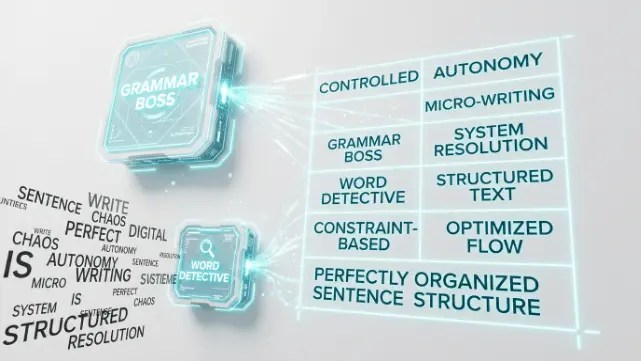
The secret engine driving this lesson is Controlled Autonomy. This is a structured, repeatable system built on the MUSIC+ Framework.
We isolate learners into a soundtrack meeting with strategic discourse roles. The Grammar Boss anchors theories in past simple syntax. The Word Detective challenges the semantic assumptions using evidence board phrases like “look back” and “recover.”
This forces students to organize past and present into a clear sequence using the target syntax Without this structured pressure, the task collapses into random tense guessing.
Assessment With a Soul & Institutional Rigor
We evaluate their work using a mathematical constraint-based micro-writing system. Students must write exactly four sentences using the target grammar and a specific board phrase.
This guarantees Assessment with a Soul. The grammar emerges naturally, completely removing the need for heavy correction.
To satisfy institutional demands, we deploy an Extended Portfolio homework module. Students expand their short in-class timeline post into a 150-word narrative entry.
The rigor is preserved. The cognitive load is redistributed.
Access the Complete Lesson Assets
When you use authentic media to displace the vulnerability, you don’t have to force engagement. I’ve mapped out this complete 60-minute lesson.
About the Author
Márcia Bonfim is an ESL/EFL teacher and the creator of Song Activity Factory. She helps educators design cognitively engaging lessons using her signature BEAT+ Method, built around the MUSIC+ Framework. Her work focuses on transforming songs from “fun extras” into structured learning systems that develop real communicative performance at higher levels. 👉 You can explore a full overview of her methodology here.

