Eliminate ESL digital burnout with Miley Cyrus’s “Younger You.” This BEAT+ MUSIC+ Experience teaches negative imperatives through digital boundary setting, replacing sterile gap-fills with peer-led negotiation and student-driven creative output.
Transforming songs into structured ESL learning systems — powered by the BEAT+ Method and the MUSIC+ Framework.
Interactive song-based lessons that build speaking fluency, discussion skills, and real-time communication. Students respond to music through predictions, opinions, and collaborative tasks that promote meaningful spoken interaction.
Eliminate ESL digital burnout with Miley Cyrus’s “Younger You.” This BEAT+ MUSIC+ Experience teaches negative imperatives through digital boundary setting, replacing sterile gap-fills with peer-led negotiation and student-driven creative output.
Stop teaching stative verbs as dry checklists. Using a song by Harry Styles, this MUSIC+ Framework lesson turns grammar into a Perception Filter—helping B2 students debate meaning, authenticity, and real communication
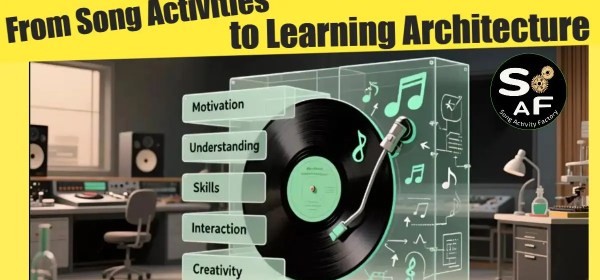
Move beyond shallow gap-fills and backshifting drills with this 20-minute C1 lesson architecture built around Amy Grant’s “The 6th of January.” Learn how to treat music as a complex text that activates high-level mediation, narrative reasoning, and communicative mastery.

A complete C1 Cambridge Speaking mock exam built around themes from Harry Styles’ song “Aperture.” Includes examiner script, visual prompts, and a teacher cheat sheet to support advanced, exam-focused speaking practice.
20-Min First Conditional Rescue with Bruno Mars.
Boost A2 students’ First Conditional skills in just 20 minutes with Bruno Mars’s “I Just Might.” This kit turns grammar practice into a narrative-driven, engaging activity, including worksheets, slides, and a performance-centered assessment. Quick, fun, and ready-to-teach — grammar meets pop culture for real classroom impact.
Struggling to teach the Second Conditional without boring drills? This lesson uses Nick Jonas’s Gut Punch to transform grammar into a tool for self-compassion. Students explore internal conflict, negotiate the “inner child,” and use language to reflect, imagine change, and bridge identity with the target structure.
 Song Activity Factory