Strategy Insights: Billie Eilish’s ‘What Was I Made For?’
The Core Shift: Transmuting the raw, ephemeral nature of pop stardom into a profound pedagogical flow that addresses existential purpose and mental health within the ESL journey.
- Main Concept: Philosophical Lyrical Synthesis & Mental Health Literacy
- Key Framework: 21st-Century Skills (Collaboration, Communication, Critical Thinking, Creativity)
- Category: ESL Pedagogy & Strategy
- Teacher Benefit: Secure a high-vibration classroom connection by bridging contemporary culture with deep, meaningful human inquiry.
- Expert Author: Márcia Bonfim
- Practical Application: Utilizing the passive voice and “used to” structures to navigate past habits and societal expectations.
- Source: Song Activity Factory
Hey there, superstar ESL educators!
Finding a song that is popular, current, AND has enough depth for a real lesson can be a challenge. That’s why I wanted to break down a track I think is a true goldmine for this: Billie Eilish’s ‘What Was I Made For?’
Your students will most likely know this one. It was a big hit back in 2023, written by Billie and her brother Finneas, and it was everywhere—TV shows, movies, you name it.
But the real value for us as teachers isn’t just that it’s popular. It’s that the song taps into those big, honest feelings of self-doubt and questioning that are so real for our students. It’s a song about looking for your purpose.
Let’s be honest, that’s a much more powerful starting point for a conversation than your average pop song. So, I want to show you some practical ways we can use this for some deep ESL analysis.
Got a minute? Let’s chat about “What Was I Made For?”
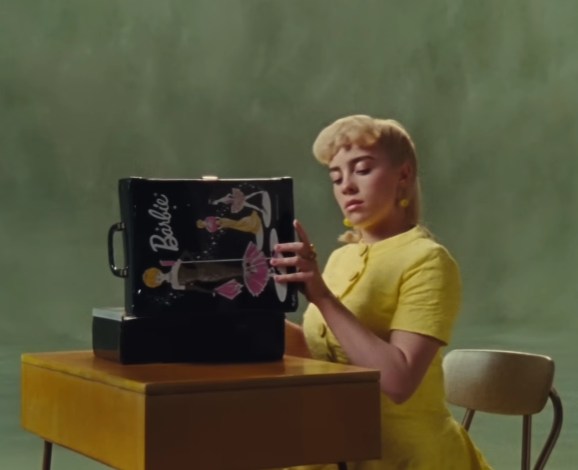
Have you added “What Was I Made For?” by Billie Eilish to your ESL music list? If not, you’re missing out. This tune hit the airwaves on July 1, 2023, and folks can’t get enough of it. It’s climbed all the way to the 20th spot on the US Billboard Hot 100. And who’s behind this cool track? None other than Billie and her super talented brother, Finneas O’Connell. Talk about sibling goals!
But enough about numbers. What really matters is how it sounds, and let me tell you, this song hits all the right notes. It’s got a catchy melody and Billie’s voice? It’s real and raw. And it’s not just another English song for ESL learners. It’s got soul.
But there’s more. This song is a big deal because it talks about something important: mental health. And it does it in a way that’s thoughtful and honest. “What Was I Made For?” has become a favorite in TV shows and movies, and it’s touched people all around the world. It’s a song about hope and not giving up, even when you’re feeling lost.
Ready to dive in and see how this song can help you teach English? Then let’s roll! It’s time to explore this song and see how we can use it for ESL song analysis.
Check out the verse-by-verse video analysis below:
Unpacking the Lyrics: What Was “What Was I Made For?” Made For in an ESL Context?
Ready to deep dive into these potent lyrics for our ESL song analysis? Great! Let’s take it verse by verse and truly decipher what Billie is trying to communicate here, and how to analyze this song for ESL learners.
Verse 1
“I used to float, now I just fall down / I used to know, but I’m not sure now / What I was made for / What was I made for?”
Right off the bat, Billie hits us with a sense of disorientation and self-doubt. She used to float, used to feel lighter, but now she feels like she’s falling. She used to know her purpose, but now she’s not so sure. Ever felt lost like that? Well, many of your students might be able to relate to this, too.
Verse 2
“Takin’ a drive, I was an ideal / Looked so alive, turns out I’m not real / Just somethin’ you paid for / What was I made for?”
Here, Billie continues the theme of feeling unfulfilled and lost. She was seen as an “ideal”, full of life, but now she questions her own reality. The line “Just somethin’ you paid for” could spark a discussion on the pressures of societal expectations and conformity.
Chorus
“‘Cause I, I / I don’t know how to feel / But I wanna try / I don’t know how to feel / But someday, I might / Someday, I might”
The chorus captures that profound desire to understand one’s emotions better, to feel something even when it’s confusing or unclear. It’s about the hope to eventually reach that understanding. Isn’t that a universal struggle we all experience in one way or another?
Verse 3
“When did it end? All the enjoyment / I’m sad again, don’t tell my boyfriend / It’s not what he’s made for / What was I made for?”
Eilish shares a more personal aspect here, hinting at a struggle to convey her feelings to others, even those close to her. It’s an opportunity to talk about the challenges of sharing our mental health experiences with others and how sometimes, we might feel like we don’t want to burden those we care about.
Outro
“Think I forgot how to be happy / Somethin’ I’m not, but somethin’ I can be / Somethin’ I wait for / Somethin’ I’m made for / Somethin’ I’m made for”
In the end, we find a flicker of optimism. She feels like she’s lost track of how to be happy, but she also realizes that joy isn’t a lost cause. It’s something she can work towards, something she’s cut out for. What a wonderful, resilient end to this whirlwind of emotions, eh?
Remember, these are just some ways to look at it, and that’s the cool part about music—it can hold different meanings for everyone. So, why not let this spark a chat in your classroom? You never know, your students might bring up views that even we didn’t consider!
Decoding the Language: Key Vocabulary and Phrases for English Songs for ESL Learners
Let’s explore the language of this song, unpacking some of the key phrases and vocabulary from “What Was I Made For?”, one of the many songs that are good for ESL learners.
1. “I used to float, now I just fall down”
The phrase “I used to…” is an excellent way to introduce or review past habits or states. Contrast it with “now I just…” to bring out the past vs present narrative. As for the words ‘float’ and ‘fall down’, they can be a great launchpad to discuss metaphors in English.
2. “What was I made for?”
This is a deep, philosophical question that can lead to some meaningful class discussions. From a language perspective, it’s a great example of using the passive voice. You could use this sentence to explain the construction and meaning of questions in the passive voice.
3. “I was an ideal”
Discuss the meaning of ‘ideal’ as an adjective and as a noun. It could be useful for students to understand the subtle changes in meaning depending on its use.
4. “Just somethin’ you paid for”
This phrase might be a bit tricky as it can be seen as figurative. It could be used to tackle the concept of consumerism, or the idea of feeling commodified.
5. “I don’t know how to feel”
This phrase can be a good start to a lesson on emotions and feelings, which is always a crucial topic for language learners.
6. “Don’t tell my boyfriend / It’s not what he’s made for”
Here, again, the passive voice comes into play. Plus, the idea of what someone is ‘made for’ can lead to conversations about expectations in relationships.
7. “Think I forgot how to be happy / Somethin’ I’m not, but somethin’ I can be”
In these lines, Billie uses a common structure “Something + I am + but + I can be” which is a great example for students to practice contrasting the present with future potential.
Remember, songs that teach English culture, history, and even pronunciation provide a more informal language register than many coursebooks. So, they’re a fantastic way to help students understand the colloquial language better. Plus, it’s always fun to decipher the hidden meanings behind these beautifully crafted lines!
Spotlight on Grammar: Key Structures in English Songs for ESL Learners
From heart-wrenching ballads to pop anthems, every song is a treasure trove of grammar, and Billie Eilish’s “What Was I Made For?” is no exception. Let’s decode some of the main grammatical structures that can serve as powerful teaching tools in our ESL song analysis.
1. Past Simple vs. Present Simple:
In the line, “I used to float, now I just fall down,” Billie beautifully illustrates the contrast between the past simple and present simple tenses. This is a conversation starter on how these two tenses can depict changes over time in English.
2. Use of ‘Used to’ for Past Habits:
Billie uses the structure ‘used to’ to express a past habit or state that has since changed, such as in “I used to know, but I’m not sure now.” This offers an excellent opportunity to dive into the topic of ‘used to’ and its contrast with the present state.
3. Passive Voice:
The recurring question, “What was I made for?” is a prime example of the passive voice. This can be a springboard for exploring the use of passive voice, its construction, and comparison with active voice.
To help your students grasp these concepts, try interactive activities like creating their own sentences using these structures or rewriting lines of the song. This not only reinforces their understanding but also encourages creative expression.
Harnessing the Power of Music: Fostering 21st Century Skills with “What Was I Made For?” in ESL Song Analysis
Songs aren’t just melodies to tap our feet to. They’re dynamic tools that can be used to spark conversations, fuel creative thinking, and build crucial 21st-century skills. So, how can we use Billie Eilish’s “What Was I Made For?”—a perfect English song for ESL learners— to do this?
Collaboration & Communication
Organize a Lyric Analysis Jigsaw Activity. Break the song into sections and assign each section to a group of students. They work together to decode the meaning, vocabulary, and grammar in their part, then present their findings to the class. This not only promotes team collaboration but also enhances communication skills as they articulate their understanding of the song.
Critical Thinking
Start a Song-Themed Debate. The song’s theme of self-identity and self-discovery can lead to deeper questions like “Are we born with a predetermined purpose or do we create our own?” Divide your students into two groups, each arguing for a different side. This can stimulate critical thinking as they analyze the song in a broader societal context..
Creativity
Unleash their creativity with a Lyric Re-writing Challenge. Ask students to rewrite a verse or the chorus of the song, either to change its meaning or to give it a personal touch. Songs that are good for ESL learners, like this one, can be a fun exercise in creative writing and can lead to some inspiring and unexpected results!
Remember, the goal is not only to teach English grammar, vocabulary, and pronunciation, but to also cultivate skills that will help students thrive in today’s interconnected world. So go ahead, hit ‘play’, and let the learning begin!
Wrapping Up: The Rhythm of Learning with Songs that Teach English Culture
There you have it, folks! A guide to transform Billie Eilish’s “What Was I Made For?” from an impactful song to a dynamic learning tool. By dissecting the song’s lyrics and themes, we’ve unearthed a treasure trove of teaching possibilities, helping students to hone both their English skills and 21st-century capabilities in our ESL song analysis.
But remember, this is just the beginning. The real magic happens in your classrooms when you and your students explore, discuss, and dive into the depths of this song together. These activities we’ve proposed are just stepping stones – feel free to tweak, transform, and even totally reinvent them to suit your teaching style and your students’ learning needs.
So give it a go, and see how this chart-topping song can fuel meaningful conversations, incite critical thinking, inspire creativity, and foster collaboration in your classrooms. And don’t forget, I’d love to hear about your experiences and any innovative ways you’ve incorporated “What Was I Made For?” into your lessons.
Teaching English is a journey, and every song is a new road to explore.
That’s is for today! Happy Teaching!
 Song Activity Factory
4 comments