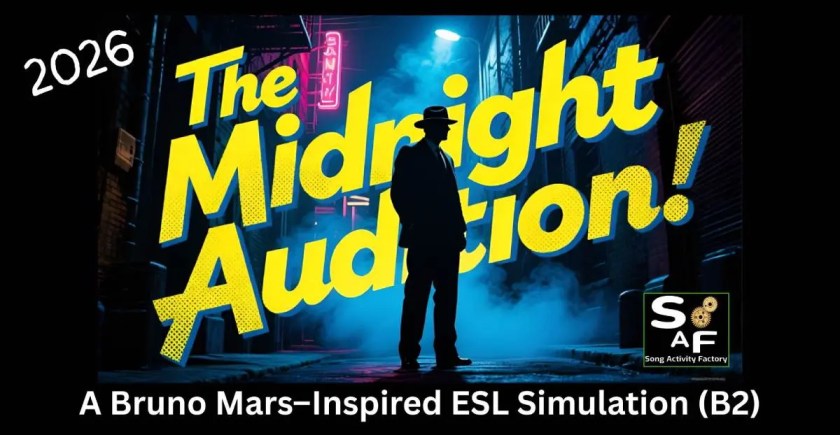
Lesson at a Glance: The Midnight Audition
- Media / Artist: “I Just Might” Bruno Mars
- Target Level: B2 (Upper Intermediate)
- Duration: 65 minutes
- Language Focus: ESL Song Lesson Plan
- Key Outcome: Students will activate modals of deduction, future perfect, and conditionals to negotiate meaning, defend strategies, and evaluate ethical consequences.
- Materials: Interactive Google Slides, Assessment & Instruction Pack (PDF)
Hello, music-loving teacher — and welcome to the beauty of 2026.
If this is your first visit of the year, I’m truly glad you’re here. Today, I’m opening a new door. Alongside my classic song activities for ESL teachers, I’m beginning to share a new narrative-style format designed for moments when a lesson calls for deeper immersion. These simulation lessons follow a Director’s Script model rather than a traditional step-by-step lesson flow.
Have you ever wanted to step beyond a familiar lesson structure? These narrative experiences are an additional option — created for times when you want more student agency, more meaningful choices, and that unmistakable spark of decision-driven language that brings the ESL classroom to life. All of this inspired by the new Bruno Mars’s new hit!
Inside the Simulation: The Midnight Audition
The Midnight Audition is a high-stakes espionage narrative inspired by the nocturnal tension and ambiguity of “I Just Might” by Bruno Mars.
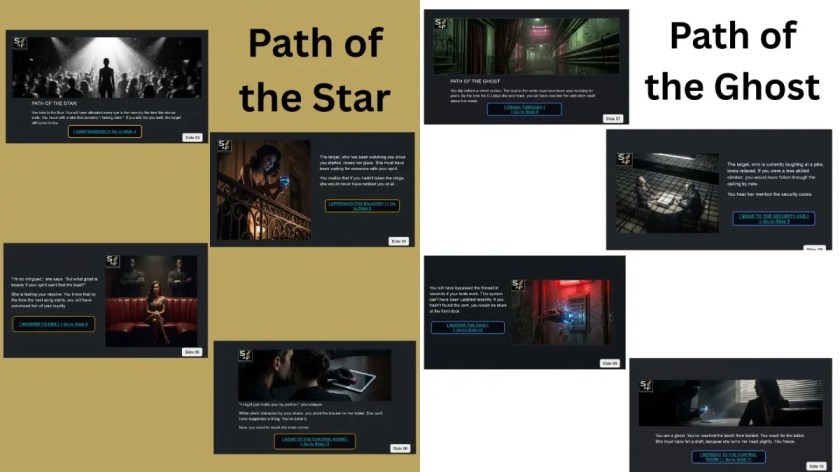
Inside the simulation, students take on the role of infiltrators navigating an operation that slowly unravels. As the mission progresses, they must:
- Negotiate identity (Star or Ghost)
- Plan under pressure with incomplete information
- Respond to internal doubt and external risk
- Face a moral trilemma with no safe outcome
The story culminates in a live ethical decision that determines the ending of the lesson.

Grammar as a Survival Tool
In this lesson, grammar is not presented as content to “cover.”
It emerges because the narrative requires it.
Students naturally activate key B2 structures as tools for thinking and persuasion:
- Modals of Deduction
to analyze hidden intentions and situational risk - Future Perfect
to project actions and consequences during the mission - Second Conditionals
to debate live decisions and hypothetical outcomes - Third Conditionals
to voice internal anxiety, regret, and post-decision reflection
If students want to be understood, to convince others, or to defend a choice, they must use precise language. Grammar becomes functional, urgent, and meaningful.
This approach is grounded in the cognitive science behind music, emotion, and memory — which I break down in detail in my overview of the science of song-based learning.
The Fluid Agency Model
Unlike traditional role-plays, no student is ever “out” of the activity.
When one faction’s strategy wins, the opposing group does not fall silent. They become the Internal Anxiety Monologue, interrupting the narrative with doubts, risks, and counterfactuals expressed through advanced conditionals.
This structure ensures:
- Continuous participation
- Natural repetition of complex grammar
- High emotional and cognitive engagement
Students are not just speaking. They are negotiating meaning.
The Moral Verdict
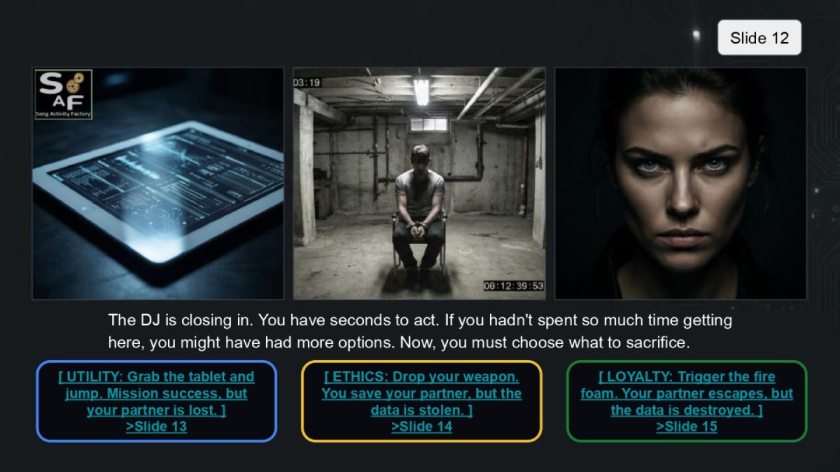
At the climax, the simulation presents a wicked problem:
- Prioritize the mission and lose a partner
- Save a life and risk global consequences
- Sabotage everything to protect loyalty
Students physically position themselves according to their choice and defend it using hypothetical logic.
The story does not move forward until the class reaches a decision.
This moment transforms language practice into genuine debate.
What You’re Getting (Free)
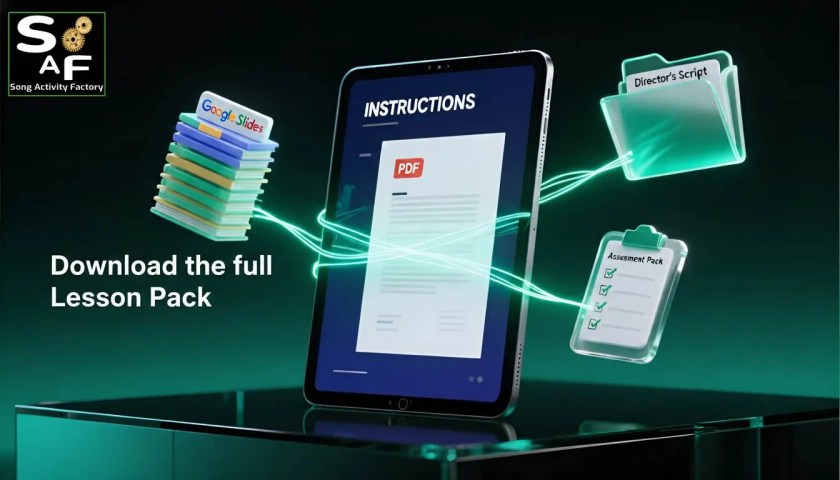
This free lesson includes one clear mission hub that gives you everything you need to run the experience smoothly and confidently:
- The Interactive Google Slides Simulation
A fully clickable, narrative-driven slide deck where student choices determine how the story unfolds. - The Director’s Script (65-Minute Mission Clock)
A step-by-step teaching guide that tells you exactly what to say, when to pause, and how to steer discussion at each stage of the simulation. - Seamlessly Integrated B2 Grammar Pathways
Built directly into the narrative and debate moments, including modals of deduction, conditionals (1st–3rd), and future perfect — activated through decision-making, not drills. - Assessment Pack (Formative, Summative & Self-Reflection)
A ready-to-use evaluation system covering live debate performance, reflective writing, teacher observation, and student self-assessment. - Post-Mission Writing Task: “Letter to the Agency”
A reflective follow-up task that consolidates language, ethical reasoning, and personal voice beyond the lesson itself.
📄 All materials are accessed through a single Instructions PDF, which contains:
- the Google Slides link
- the Assessment Pack link
- the complete Director’s Script
- guidance for running and adapting the lesson
If you’re curious about the philosophy behind this approach, I explore how to assess ESL learning through songs in a way that values language use, reflection, and decision-making — not just right answers.
One Last Thing
If you run this lesson, your students won’t ask,
“Are we doing grammar today?”
You’ll hear things like:
“If we had chosen the other path, none of this would have happened.”
“He must have known we were coming.”
They won’t be talking about a story.
They’ll be thinking, arguing, and deciding in English.
Welcome to The Midnight Audition.
Happy teaching.
Author Bio:
About the Author:Márcia Bonfim is an ESL/EFL teacher and creator of the Song Activity Factory. She helps educators create engaging lessons using her signature BEAT+ Method, which features the MUSIC+ Framework. You can discover her complete methodology summary here.
 Song Activity Factory