
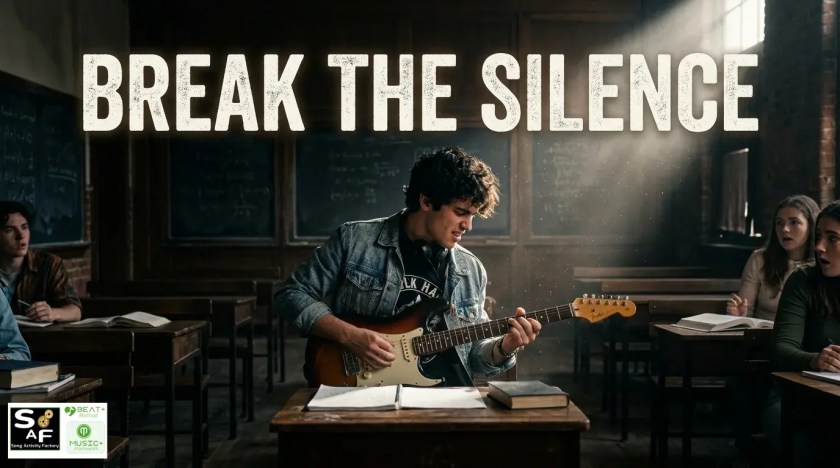
Have you ever tried teaching the second conditional and hit a wall of blank stares?
We hand out the worksheets, drill the “If I had a million dollars” examples, and wait for the conversation to start. Instead, we get crushing classroom silence. When students just fill in blanks, they learn to recite rules but remain too afraid to speak.
I have found that music changes everything. By bringing songs into the room, we can use these 3 second conditional activities to get students talking, debating, and creating with confidence.
Why Do Students Struggle with Second Conditional Activities?
Students struggle with second conditional activities because traditional lessons focus entirely on abstract grammar rules rather than meaningful communication. When we strip the emotion away and rely only on worksheets, learners become terrified of making mistakes. Using a five-phase learning sequence built around popular songs provides the familiar context they need to speak fearlessly.
Here is the truth:
1. How Can We Use Audio Hunts for Second Conditional Activities?
You can use an audio hunt to transform passive listening into a focused search for specific second conditional phrases within a song. By asking students to logically sequence hypothetical scenarios based on what they hear, they actively process the target grammar during a realistic listening challenge.
![[SEQUENTIAL COMIC PANELS] A visual sequence showing a student listening to music and ordering mixed lyric strips.](https://songactivityfactory.com/wp-content/uploads/2026/07/audio-hunt-sequence.webp)
We often ask students to read textbook scenarios, but this rarely sparks genuine interest. Instead, we should replace quiet reading with an active listening challenge. By tying language to rhythm, the music acts as a memory anchor. Students listen closely to a song to extract and sequence the hypothetical situations.
To execute this, cut the chorus of a song featuring the second conditional into strips of paper. Give these strips to small groups. Their objective is to listen to the song and put the lyrics back into the correct order based entirely on what they hear. The focus is purely on capturing the grammar as it flows naturally in the music.
But there is a catch.
2. What Are The Best Group Problem-Solving Second Conditional Activities?
The best group problem-solving activities require students to confidently use the second conditional to resolve conflicts presented in a song’s narrative. When we assign specific classroom roles and ask them to debate a hypothetical outcome, they naturally practice the grammar as a necessary tool for genuine communication and shared understanding.
![[THEMATIC PROP / ARTIFACT] Role cards for The Time Keeper and Grammar Boss laid out on a table.](https://songactivityfactory.com/wp-content/uploads/2026/07/group-problem-solving.webp)
We consistently struggle to get students speaking naturally during complex grammar lessons. Therefore, we must move past solo drills. By designing focused group work, we drastically increase speaking time. Students work in small groups to debate a character’s choices, relying on the target grammar to argue their point.
Play a narrative song where the singer faces a difficult choice. Put students into groups of three and give each person a specific job, like The Time Keeper or The Grammar Boss. Ask them: “If you were the singer, what would you do differently?” They must discuss the conflict and present a shared group decision using the second conditional to defend their choice.
Now, let’s look at the final step.
3. How Do Creative Writing Prompts Work As Second Conditional Activities?
Creative writing prompts work by pushing students to transform a song’s original message and independently write their own hypothetical verses. This requires them to apply the grammar accurately to express their feelings. The abstract structure becomes a practical tool for self-expression.
![[FUNCTIONAL INFOGRAPHIC / SPLIT-SCREEN] Split-canvas contrasting a somber singer with a student's bright rewrite.](https://songactivityfactory.com/wp-content/uploads/2026/07/alternate-reality-rewrite-conditional.webp)
Students rewrite a verse from a song by imagining how the story would change if the circumstances were entirely different.
We usually test grammar by asking students to complete isolated sentences that have absolutely no personal meaning. Asking learners to write their own lyrics challenges them to think carefully about how they construct their sentences. By asking them to write their own lyrics, we guarantee they practice the exact grammar point while taking full ownership of the language.
Give students a writing prompt based on the song they just heard. Instead of random sentences, challenge them to write a direct message to the singer or a secret note to their future self. This works beautifully via the Textbook Rescue Series designed for fast classroom application, or through a dedicated second conditional lesson exploring self-compassion. Students must use the second conditional to articulate personal reflections, turning the abstract grammar into a practical tool for self-discovery.
Bringing Life Back to the Second Conditional
Teaching this grammar point no longer has to result in a room full of blank stares and silent students. By bringing music into your classroom and using these dynamic, song-based activities, you replace boring worksheets with real energy. Your students will finally stop fearing mistakes and start speaking with genuine confidence.
Turn Any Song Into a Structured ESL Lesson in 5 Minutes
Get the FREE 5-Minute AI Cheatsheet and discover the ‘Master Prompt’ that eliminates lesson planning guesswork.

