
Strategy Insights: Implementing Interaction+
- Main Concept: The Interaction+ Phase of the BEAT+ Method
- Key Framework: MUSIC+ Framework / BEAT+ Method
- Teacher Benefit: Overcome classroom silence and build speaking trust without losing structural control.
- Practical Application: Assigning target-language roles to generate self-policing group discussions.
The Dead End of Solo Performance
Have you ever delivered a lesson where the room remains entirely silent? Students recognize the rules, but cannot speak. In previous articles exploring the MUSIC+ Framework, we outlined Motivation+, Understanding+, and Skills+. At this point, the students know the target language. But if the sequence stops here, we abandon them.
Standard English teaching assumes individual worksheet practice automatically creates conversational fluency. Traditional practice often isolates grammar from the situations that make learners want to use it. By treating language as a solo performance, we create a dead end. We produce learners who know the rules but freeze when negotiating meaning with another human being.
![[FUNCTIONAL INFOGRAPHIC / SPLIT-SCREEN] Teacher-led silent worksheet drilling contrasted with noisy collaborative interaction](https://songactivityfactory.com/wp-content/uploads/2026/07/interaction-plus-transition-shift.webp)
Activating the Interaction+ Phase
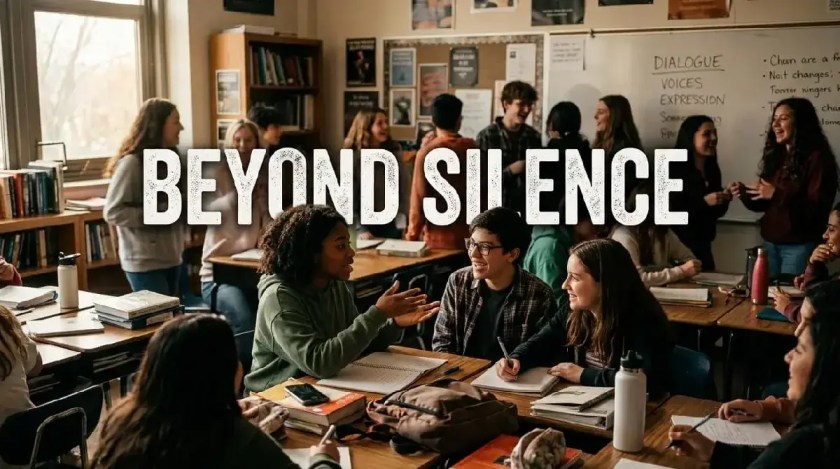
The practical solution is Interaction+, the fourth phase of the MUSIC+ sequence powering the BEAT+ Method. This is where passive rules become active habits through interaction. Language is a chorus, not a solo. Interaction+ shifts classroom energy toward collaborative work. The output is a noisy process of sharing interpretations.
Language is a chorus, not a solo. Interaction+ shifts classroom energy toward collaborative work.
Consider a B1 lesson analyzing “Younger You” by Miley Cyrus. Instead of passively listening, students collaboratively predict an unresolved narrative cliffhanger. They must defend their theories, explicitly using Modals of Deduction to argue their points. The grammar is no longer a checklist item; it becomes a functional tool for genuine communication.
Teacher Insight
Handing more responsibility for communication to students can feel risky at first. Teachers worry about uncorrected mistakes and classroom chaos. However, Interaction+ is not an unstructured free-for-all. We manage this risk through peer accountability. By assigning target-language roles like Word Detective, students keep the conversation on track themselves.
Embracing the Cost of Shared Discovery
Entering this phase demands a conscious trade-off. The teacher must accept a temporary drop in individual perfection. We often need to relinquish a degree of control over classroom noise levels. This buzz of shared discovery is a feature, not a bug. Momentary noise is the cost of building trust required to actually speak.
When a song becomes the shared property of the classroom, the environment changes permanently. We transition from teaching isolated individuals to guiding active learners. But this social negotiation is only a stepping stone. Students must eventually connect with their own inner voice. Next, we will explore Creativity+.
 Song Activity Factory