
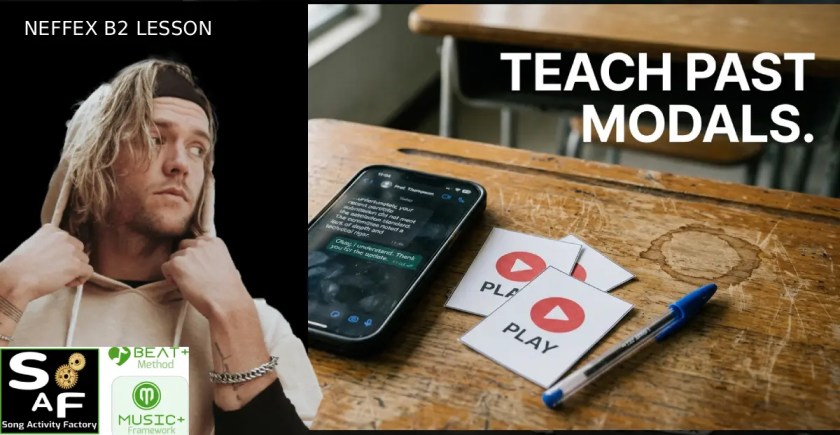
Lesson at a Glance: The Dialogue Decoder
- Media / Artist: NEFFEX (“Stay Strong”, “Hustlin'”, “Ruthless”)
- Target Level: B2 (Teens and Adults)
- Duration: 60 min
- Framework: BEAT+ Method (MUSIC+ Framework)
- Language Focus: Past Modals of Deduction (must have / might have / can’t have)
- Key Outcome: Generate creative output that resolves a social conflict in a modern digital format utilizing the target grammar and resilience vocabulary.
- Materials: Google Slides, Student Worksheet, Assessment Pack
ESL Song Activities: Moving Beyond the Grammar Worksheet
We have all seen it happen. You hand out a reading text or a worksheet on past modals of deduction. The students understand the rules perfectly on paper. They know how to form “must have” and “might have” to speculate about past events. However, the moment you ask them to speak naturally, they freeze. They drop the complex grammar entirely and revert to simple past tense sentences. The problem is not the grammar itself. The problem is that traditional textbook scenarios lack the emotional stakes required for real communication.
To resolve this in my song-based lessons, I completely replace generic prompts with a high-stakes, relatable human crisis. Using three short, hard-hitting tracks by NEFFEX, I provide a structured system that encourages students to use past modals of deduction to navigate failure and rejection.
Here is how I structure this lesson to move from passive listening to active, syntax-driven debate.
Listening Activity: The Acoustic Bet
The sequence begins before the music even plays. I present a digital text message thread on the board where a student named Sam is devastated over a rejected university portfolio. Sam feels like quitting, and a friend is trying to offer support. This immediate visual context gives the students a concrete reason to care.
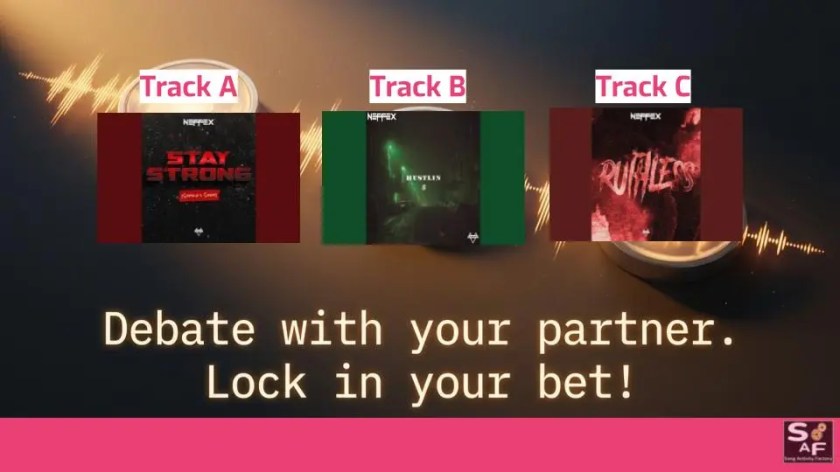
Next, I play three separate audio clips from NEFFEX tracks. I do not hand out the lyrics. The students read the text messages, listen to the 60-second clips in absolute silence, and then place an “Acoustic Bet” on which track contains the most helpful advice for Sam.
Many students appear to understand a song simply because they can infer the emotional message from the music itself. The Acoustic Bet forces them to verify those assumptions against the actual language. To ensure true linguistic noticing, I hand out the actual lyrics after they vote. Students must verify their bets and extract specific resilience vocabulary directly from the text.
Structuring the Debate
Once the vocabulary is established, the lesson moves into a peer-to-peer debate. However, open-ended group work often causes working memory overload, leading students to abandon their target grammar. To prevent this, I divide the class into groups of three and assign strict accountability roles:
- The Evidence Analyst: Their job is to require the group to base their opinions on literal evidence quoted directly from the lyrics or text messages.
- The Speculation Boss: Their job is to ensure the group uses correct past modals of deduction (must have, might have, can’t have) when guessing how the characters felt.
- The Time Keeper: Their job is to gently guide the group toward answering the deep questions before the clock runs out.
This predictable, role-based structure gives quieter learners a protected reason to speak up. The structured system removes chaotic prep guesswork. The structure is already built so teachers do not spend hours wondering what to do next to keep the conversation moving. Students stop relying on the teacher for correction and start policing the conversational accuracy themselves.

The Digital Resolution
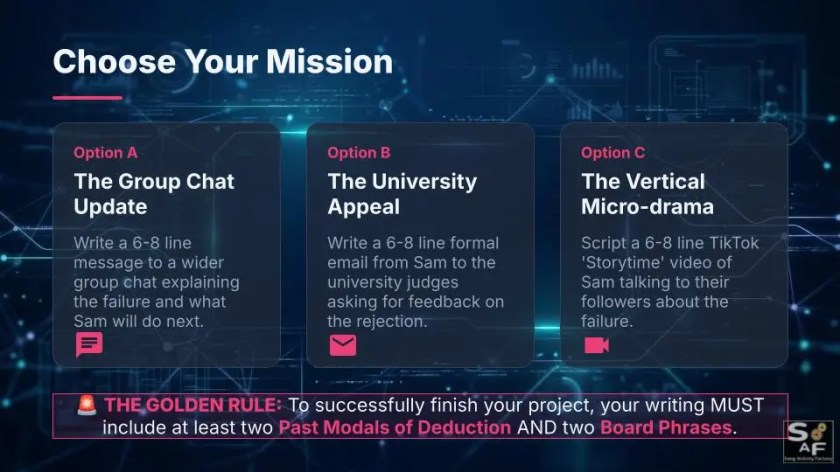
When moving to output, I replace standard essay writing with a guided choice matrix. Students select one of three modern digital formats to resolve the social conflict. They can write a group chat update, script a TikTok storytime video, or draft a formal university appeal.
While they have the freedom to choose their format, their autonomy is bounded by a strict linguistic constraint. Their text must successfully include at least two past modals of deduction and two target vocabulary words from the board. This specific boundary discourages students from retreating into safe, basic language and requires them to stretch their current capabilities. I then use a simple observation checklist to assess learning without interrupting their creative flow.
Conclusion
When you frame complex grammar as a practical tool for navigating a highly relatable human crisis, everything changes. Your students stop viewing past modals of deduction as a frustrating set of rules to memorize. Instead, they use the structure of your task to build their confidence, accurately defending their own ideas under pressure and successfully negotiating a real human conflict in English.
These specific acoustic bets and accountability roles are fully integrated into the ready-to-use teaching kits you can access in the Master Suite below.
About the Author
Márcia Bonfim is an ESL/EFL teacher and the creator of Song Activity Factory. She helps educators design cognitively engaging lessons using her signature BEAT+ Method, built around the MUSIC+ Framework. Her work focuses on transforming songs from “fun extras” into structured learning systems that develop real communicative performance at higher levels. You can discover her complete methodology summary here.


One comment