Strategy Insights: 5 Strategies to Ignite Participation
- Main Concept: A multi-sensory approach to language acquisition built on five pillars: Provocative Prompts, Visual Storytelling, Team Challenges, Strategic Movement, and Psychological Pairing.
- Key Framework: A pedagogical model that leverages neurological shortcuts—such as visual processing and mirror neurons—to reduce cognitive load and performance anxiety.
- Teacher Benefit: Provides adaptable, research-backed frameworks that transform language from an academic requirement into a visceral, memorable tool for social connection.
- Practical Application: Implementing “Visual Sparkers” for narrative construction, using kinesthetic catalysts to improve retention, and utilizing “Conversation Catalysts” to foster critical justification of opinions.
“Words make you think a thought. Music makes you feel a feeling. A song makes you feel a thought.” E. Y. Harburg
Song Activity Factory emerged from a critical mission: supporting English language teaching professionals who understand music’s transformative power in language learning. The challenge has always been finding contemporary, engaging song activities that transcend the dreaded gap-filling exercises – activities that truly inspire students to speak.
The song-based activities and lesson plans at Song Activity Factory are designed to motivate, engage, and unleash students’ communication potential. Discover five innovative strategies that will turn your classroom into a dynamic speaking environment.
1. Ignite Conversation with Provocative Prompts
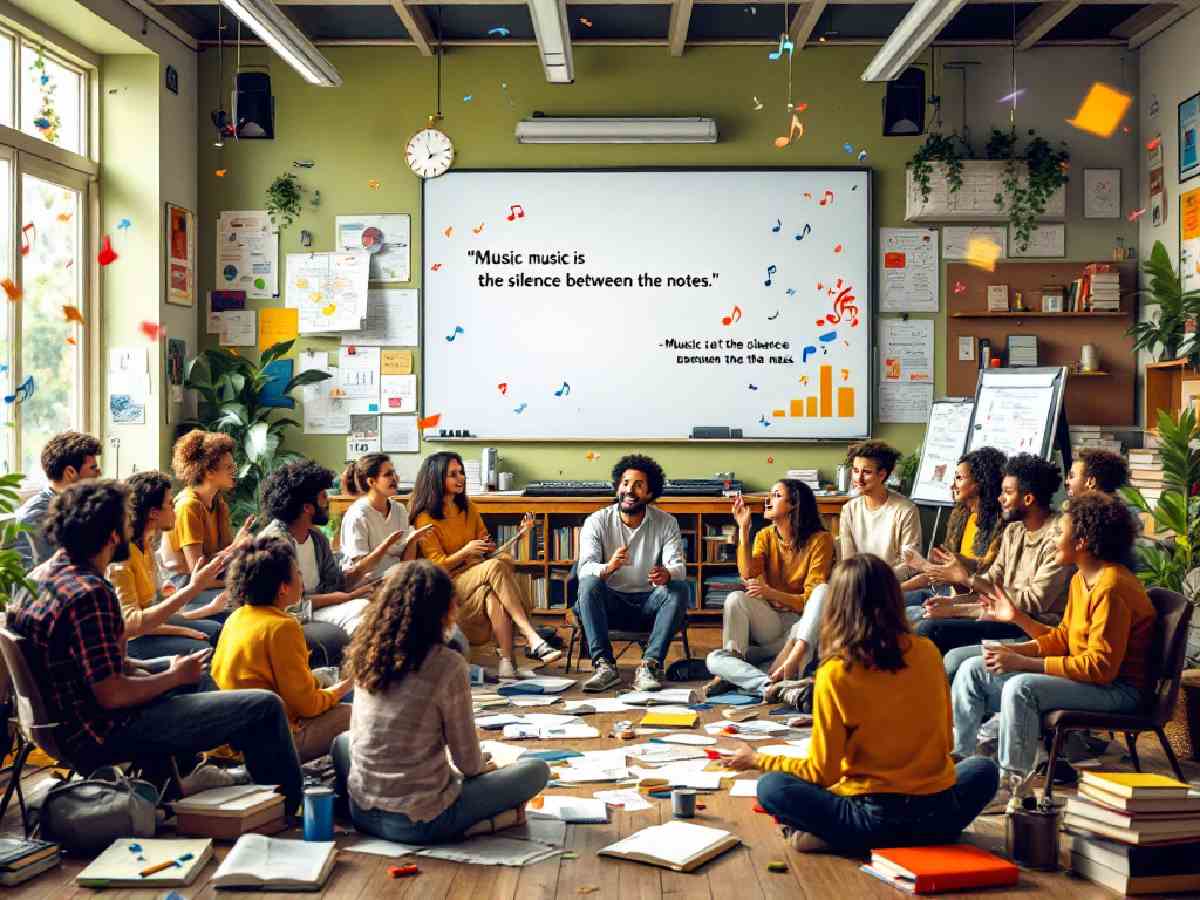
Language learning thrives on curiosity and emotional engagement. The art of sparking student dialogue is far more nuanced than simply asking generic questions. Effective conversation starters challenge students’ perspectives, provoke critical thinking, and create a safe space for authentic expression.
Provocative prompts work by tapping into students’ natural desire to share opinions, tell stories, and connect with others. They break through the initial language barrier by motivating students to communicate beyond grammatical precision. The goal is to make speaking feel less like an academic exercise and more like a genuine human interaction.
Key strategies for selecting powerful conversation starters include:
- Choose prompts that invite multiple interpretations
- Create space for personal storytelling
- Challenge students’ existing perspectives
- Use language that sparks emotional response
- Ensure prompts are culturally sensitive and age-appropriate
Psychological Principles in Action:
- Controversial quotes trigger natural curiosity
- Multilayered song titles invite personal interpretation
- Lyrical extracts that demand deeper reflection create meaningful dialogue
Example of song-based lesson plans that feature Conversation Catalysts:
Practical Implementation Tip: Begin with low-stakes, engaging prompts that allow students to express themselves freely. Gradually increase complexity as their confidence grows, always maintaining an atmosphere of supportive, judgment-free communication.
2. Harness the Power of Visual Storytelling

Visual communication is a universal language that transcends linguistic barriers. In language learning, images are not mere decorative elements but powerful cognitive tools that activate multiple levels of student engagement, memory, and creativity.
The human brain processes visual information 60,000 times faster than text. This neurological shortcut makes images an incredibly potent teaching instrument, especially for language learners who might struggle with abstract verbal concepts. Visual storytelling transforms passive language consumption into active interpretation, compelling students to articulate their perceptions, emotions, and narratives.
Cognitive and Linguistic Benefits of Visual Storytelling:
- Reduces language anxiety by providing a concrete starting point
- Activates multiple areas of the brain simultaneously
- Allows students to express complex ideas beyond their current vocabulary
- Creates a low-pressure environment for linguistic experimentation
- Bridges cultural and linguistic gaps through shared visual experiences
Advanced Visual Inspiration Techniques:
- Connect images to song themes strategically
- Use music video stills as multi-layered narrative prompts
- Encourage creative, divergent interpretations
- Select visuals that provoke emotional and intellectual responses
- Create scaffolded speaking activities around visual stimuli
Psychological Frameworks in Visual Language Learning:
- Provide visual context that reduces cognitive load
- Allow students to build narratives from visual cues
- Create a storytelling environment that feels like play, not performance
- Enable learners to take linguistic risks in a supportive context
Practical Implementation Strategies:
- Start with simple, emotionally evocative images
- Gradually increase visual complexity
- Design open-ended questions that invite multiple interpretations
- Create collaborative storytelling activities
- Rotate visual sources to maintain student engagement
Example of song-based lesson plans that feature Visual Sparkers:
Critical Teaching Insight: The most effective visual storytelling activities don’t just ask students to describe what they see, but to construct entire worlds, hypothetical scenarios, and personal connections based on visual stimuli.
3. Transform Learning into Team Challenges
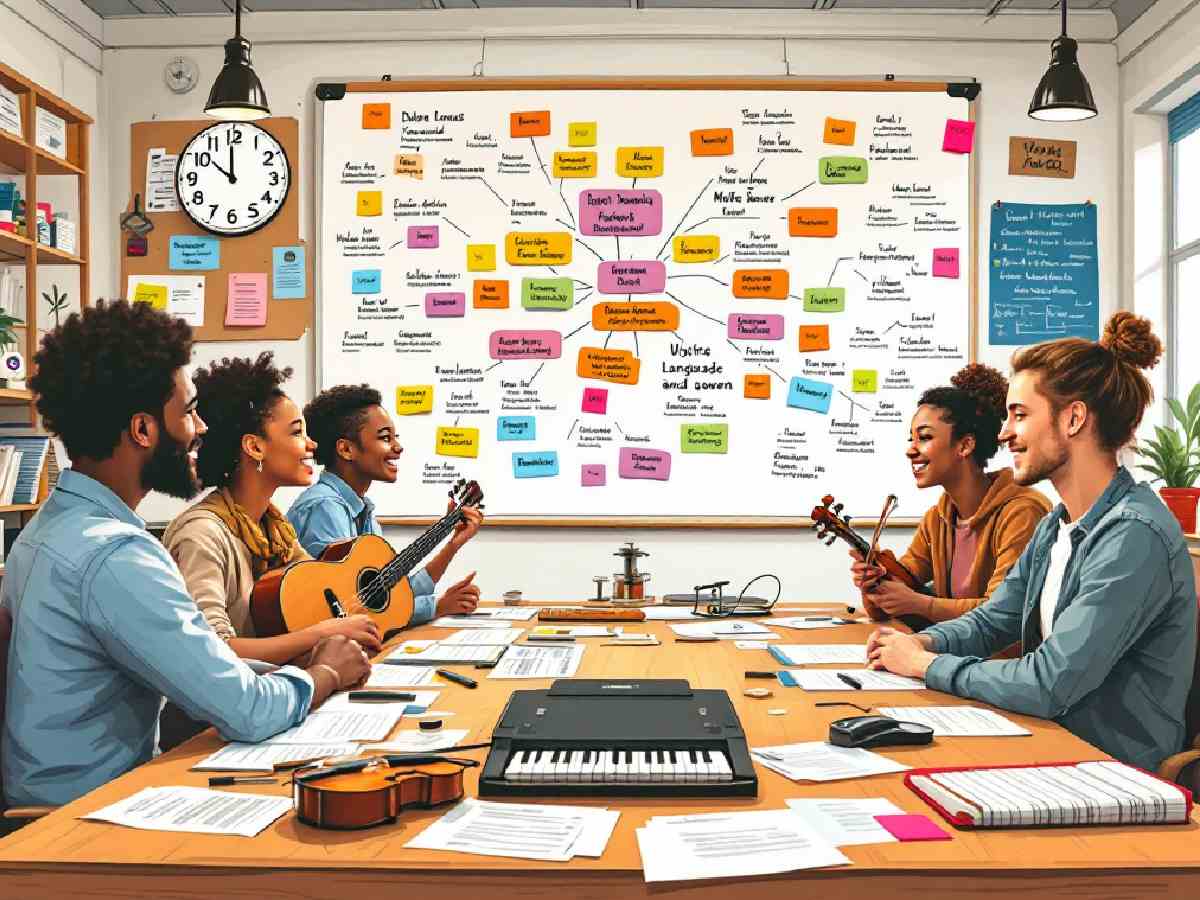
Collaborative learning is more than a pedagogical strategy—it’s a powerful social mechanism that transforms language acquisition from an individual struggle to a collective adventure. Team-based activities tap into fundamental human psychological needs: belonging, social validation, and shared achievement.
The neuroscience of collaborative learning reveals profound insights. When students work together, they activate mirror neurons that enhance empathy, communication skills, and linguistic flexibility. Team challenges create a micro-community where language becomes a tool for genuine interaction rather than an academic requirement.
Collaborative Learning Dynamics:
- Reduce individual performance anxiety
- Create a supportive, low-risk communication environment
- Distribute cognitive load across team members
- Encourage peer learning and spontaneous language negotiation
- Build social-emotional skills alongside linguistic competence
Advanced Team Challenge Design Principles:
- Create tasks that require genuine communication
- Ensure interdependence through carefully structured roles
- Design challenges with multiple possible solutions
- Balance individual accountability with team success
- Rotate team compositions to maximize interaction
Psychological Safety Mechanisms:
- Allow students to take linguistic risks
- Provide collective shield against individual embarrassment
- Create positive interdependence
- Reward collaborative problem-solving
- Develop communication strategies through negotiation
Linguistic Skill Development:
- Negotiation techniques
- Active listening
- Collaborative problem-solving
- Conflict resolution
- Collective meaning-making
Example of song-based lesson plans that feature Team Challenges:
Critical Teaching Insight: Effective team challenges are not about competition, but about creating a supportive ecosystem where language emerges naturally through meaningful interaction
4. Energize Through Movement

Physical movement is not a distraction from learning—it is a fundamental cognitive catalyst that transforms linguistic performance. Movement activates multiple neural pathways, increases blood flow to the brain, and releases neurotransmitters that enhance memory, attention, and emotional engagement.
Neurological Benefits of Movement in Language Learning:
- Increases neuroplasticity
- Reduces stress hormones
- Enhances cognitive flexibility
- Improves information retention
- Stimulates multi-sensory learning experiences
Kinesthetic Learning Strategies:
- Integrate rhythmic physical responses
- Use body language as communication tool
- Create full-body linguistic experiences
- Design movement-based comprehension activities
- Transform abstract language concepts into physical metaphors
Emotional and Physiological Impacts:
- Breaks down psychological barriers
- Releases performance anxiety
- Creates positive associations with language learning
- Stimulates endorphin production
- Increases overall classroom energy
Movement Implementation Techniques:
- Start with low-intensity activities
- Provide clear, simple instructions
- Create safe, inclusive physical experiences
- Respect individual comfort levels
- Gradually increase complexity of movement-language integration
Example of song-based lesson plans that feature Movement Activities:
Critical Teaching Insight: Movement is not about entertainment, but about creating embodied learning experiences that make language visceral and memorable.
5. Strategic Student Pairing

Effective student pairing is an art form that goes beyond simple classroom management. It’s a nuanced psychological intervention that creates optimal conditions for linguistic growth, personal confidence, and meaningful communication.
Social-Psychological Pairing Principles:
- Recognize individual linguistic comfort zones
- Create supportive micro-environments
- Balance communication dynamics
- Foster mutual linguistic scaffolding
- Develop empathetic communication skills
Advanced Pairing Strategies:
- Match students with complementary communication styles
- Create pairs with balanced linguistic potential
- Design activities that require mutual support
- Rotate pairings to develop adaptability
- Provide structured communication frameworks
Psychological Safety Mechanisms:
- Reduce individual performance anxiety
- Create low-risk communication spaces
- Build mutual linguistic confidence
- Encourage reciprocal learning
- Develop interpersonal communication skills
Linguistic Development Focus:
- Active listening techniques
- Conversational turn-taking
- Collaborative meaning negotiation
- Empathetic communication
- Linguistic scaffolding
Example of song-based lesson plans that feature Strategic Pairing:g:
Critical Teaching Insight: Effective pairing is about creating a supportive ecosystem where students feel safe to experiment, make mistakes, and grow together.
These strategies are adaptable frameworks designed to transform English teaching moments into engaging, motivating experiences that resonate with students worldwide.
Spread the Language Learning Revolution!
Share this post and help fellow educators reimagine music-powered language learning.
 Song Activity Factory
2 comments