
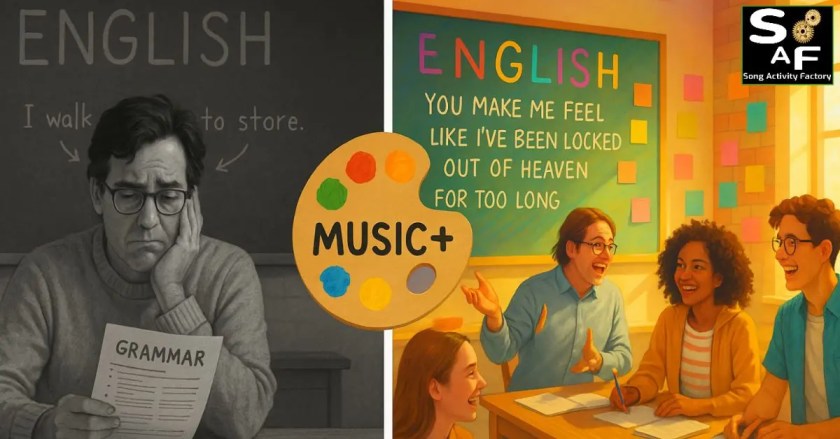
Strategy Insights: The MUSIC+ Framework Case Study
- Main Concept: Elevating song-based lessons from simple grammar hunts to holistic experiences that build curiosity, deepen comprehension, and spark creative artistry.
- Key Framework: The MUSIC+ Framework (Motivation+, Understanding+, Skills+, Interaction+, and Creativity+).
- Teacher Benefit: Transforms the classroom atmosphere into a buzzing, collaborative environment where students evolve from passive learners into confident artists using their own voices.
- Practical Application: Implementing thematic “Visual Hooks” to prime emotional investment, clearing lexical fog with “Vocabulary Foundations,” and empowering students via “Creative Signatures.”

Let’s be honest. We’ve all done it.
You find a great song. Perfect grammar point. You create a worksheet, run the activity, and… that’s it. It works, kind of. But doesn’t it feel a little… flat? Like we’ve handed our students a black-and-white sketch when we could be giving them a full-color painting.
That’s what this case study is all about. It’s not about abstract theory; it’s a practical, step-by-step walkthrough. I’m going to show you exactly how I took one of those black-and-white lessons and filled it with color using the MUSIC+ Framework.
Before we break down the lesson, you might be wondering, “So what exactly is this MUSIC+ Framework you’re talking about?”
Understanding the MUSIC+ Framework
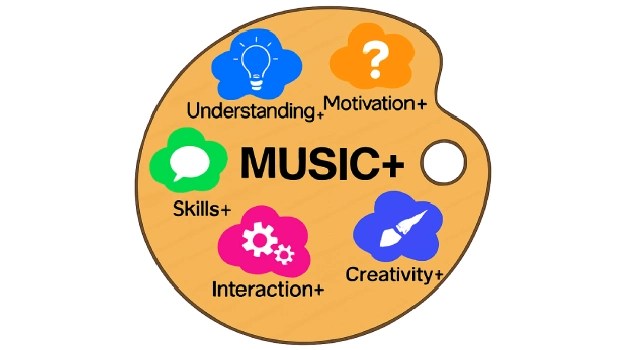
It’s simple, really. Think of it as our artist’s palette. It’s a way of thinking about our song-based lessons to make sure we’re not just creating a black-and-white sketch (like a grammar drill), but a full-color experience.
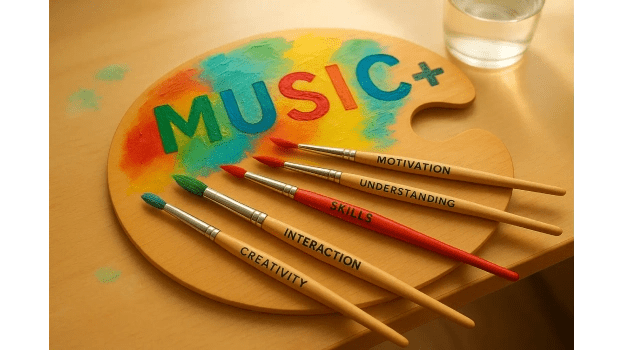
MUSIC+ is an acronym for the five core principles that create a lesson that connects with students on every level:
- Motivation+: How we spark curiosity and create an emotional hook. The desire to learn.
- Understanding+: How we build a foundation of meaning and context. …The reason to listen.
Then comes Skills+ (S+), which is the actual “how-to”—the clean, strong lines of our sketch where we practice the grammar or vocabulary. After the lines are drawn, we need Interaction+ (I+). This isn’t just group work; it’s the sharing. It’s where we invite everyone to talk about the sketch, to connect with it, and with each other. And finally, my favorite part, Creativity+ (C+). This is the artistry. That final, beautiful moment. We hand the brush to our students, and they add their OWN color to the painting.
And when you bring all those colors together? That’s the real magic. Suddenly, it’s not a lesson anymore. It’s a shared journey. You’ve stopped just teaching English. You’re connecting with a whole person. Heart. Mind. And SOUL.
So now that we have our full palette ready, let’s take a look at that first black-and-white sketch we’re about to transform.
First, The Black-and-White Sketch (The “Before”)
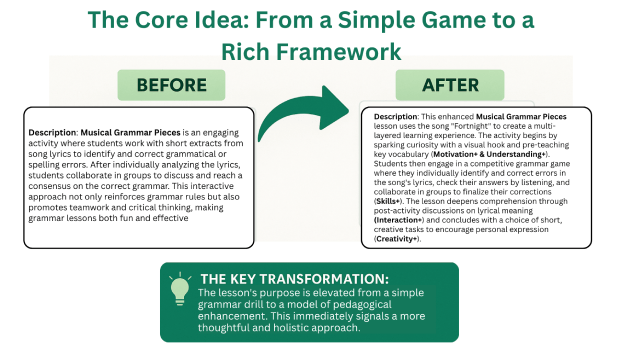
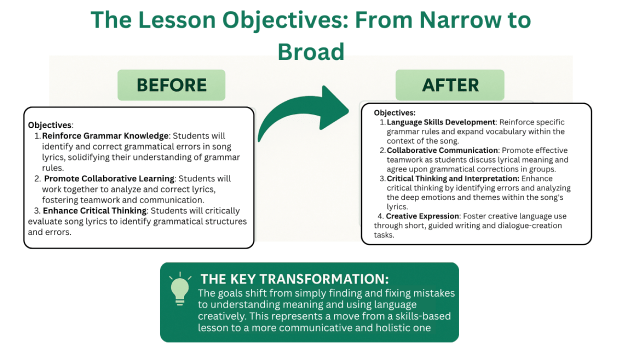
I want to be clear: the original lesson is already good. It’s a solid grammar game, the kind we all use because it works. It’s a great foundation. A perfect sketch to start with.
The flow is simple and clear: you announce the task of hunting for grammar mistakes, show them the lyric extracts to correct, and let them listen to check. After that, they compare answers in groups to see who got it “right,” a winner is declared, and the lesson is over.
The Diagnosis: It’s a great sketch! The lines are clean, the Skills+ (S+) practice is solid. It even has a little Motivation+ (M+) with the game. But where’s the color? Where’s the background? The deep Understanding+ (U+) of the song’s story is missing. And where’s the part where the student gets to pick up their own brush? The Creativity+ (C+) is nowhere to be found.
It’s a fantastic brain exercise. But the heart is sitting on the sidelines.
The Transformation: How We Add the Color
We aren’t throwing the sketch away. We’re using it as our foundation. The grammar game is still our anchor, our Skills+ core. We’re just going to build a richer experience around it.
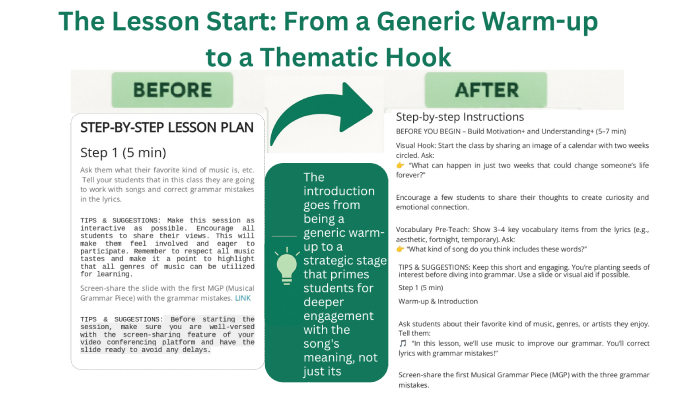
First, We Prepare the Canvas (Adding M+ and U+)
Before the grammar game even starts, we add two simple steps at the beginning.
The “Visual Hook” (Motivation+): Instead of just saying, “Let’s correct grammar,” I show them a picture of a calendar with two weeks circled. I ask one simple question:
“What can happen in just two weeks that could change someone’s life forever?”
The Impact: This takes 60 seconds. But suddenly, they aren’t thinking about grammar. They’re thinking about life, love, and loss. They’re curious. They’re emotionally connected to the song’s theme (fortnight) before they’ve heard a single note.
The “Vocabulary Foundation” (Understanding+): Next, I introduce a few key words from the lyrics, like aesthetic and temporary.Why It Works: Clarity. That’s the whole point. This part isn’t a test—we’re not trying to catch them out. We are simply clearing away the fog. By introducing a few key words before the music starts, we remove those little obstacles that make a student stop, get frustrated, and tune out. The result? They can just listen. They can feel the story unfold and connect directly with the song’s HEART, without any static in the way.
Next, We Deepen the Hues (Enhancing I+ and C+)
The original lesson ended after the game. This is where we continue the journey.
The “Meaningful Discussion” (Interaction+): After the grammar game, I put them back into their groups. But this time, the goal isn’t just accuracy. It’s interpretation. I ask them:
“What does ‘I love you, it’s ruining my life’ really mean? Can love feel like that?”
The Impact: And in that moment, everything shifts. We’ve moved beyond right-or-wrong and into real, human conversation. They start using the song’s language to share their own ideas and pieces of their own lives. The interaction is suddenly ALIVE.
The “Creative Signature” (C+): And for the final masterpiece? We hand the brush over to THEM. This is the ultimate goal of the lesson. I give them a quick, empowering task, like rewriting a line or writing the next two.
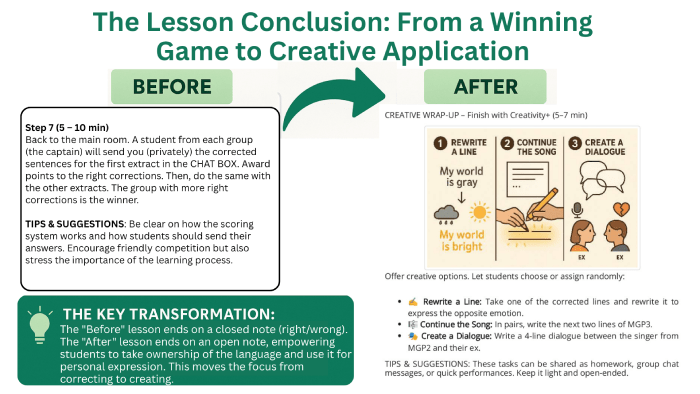
The Impact: And this final part, this creative step… for me, this is the whole reason we use music. It’s the moment the lesson truly becomes theirs. They’re no longer just looking at someone else’s art; they are making their own. You can see it happen—they stop being students who are simply correcting language and transform into artists who are using it. It’s their voice, their story. And it is absolutely beautiful to watch.
Your Turn: Download the Full-Color Lesson Plan
Now that you’ve seen the transformation, it’s your turn to bring this energy into your own classroom! I’ve put the complete, enhanced lesson plan—along with all the tips and resources—into a beautiful PDF for you to download and use.
[Click here to download your free PDF of the enhanced “Fortnight” lesson plan.]
The Result: Our Full-Color Masterpiece
And what’s the result of all this? Suddenly, the lesson we built together has a beautiful new flow, a living rhythm. It starts with the heart, moves to the mind, and ends with the students’ own creative voice.
So what’s the real difference? It’s EVERYTHING.
It’s what happens when the grammar game ends and the real conversation begins. You see, students don’t just feel good because they got the ‘right’ answer. They feel confident because they shared an opinion, they created something that was THEIRS.
And the energy in the room? WOW. It’s a total transformation. Suddenly, it’s not quiet anymore. It’s buzzing. It’s alive. Full of curiosity. Full of REAL communication. You realize you’re not just ‘teaching grammar’ anymore. You’re sharing a human experience. All through a simple song.
So remember that. The music is your paint. Your job is to hand them the brush.
Go on. Let them create something beautiful.
Did you enjoy this creative approach? This lesson is a real-world example of the principles from my complete methodology. To dive deeper into the MUSIC+ Framework and discover more strategies, check out my complete guide: How To Use Songs To Teach English.
Frequently Asked Questions (FAQ)
How are these activities more than just a game?
While they use game-like elements for motivation, these activities are designed for deeper learning. They start with an emotional hook and end with a creative task, ensuring students don’t just practice a skill but also understand context and apply language personally.
Can this framework work for beginner students?
Yes, the framework is highly adaptable. For lower levels (CEFR A1-A2), choose songs with simple, repetitive lyrics and focus the Skills+ step on basic vocabulary or sentence structures. The creative task can be as simple as drawing a picture about the song’s story.
How do you find time for creative activities?
The MUSIC+ Framework is designed for efficiency. The “Visual Hook” and “Vocabulary Foundation” steps take only 5-7 minutes combined. This small investment upfront creates deeper engagement, making the rest of the lesson flow more smoothly and effectively. These are truly time-saving song activities for ESL teachers.
Why is a ‘thematic hook’ better than a regular warm-up?
A generic warm-up (“How are you?”) doesn’t prepare students for the lesson’s content. A thematic hook (like the calendar picture) connects directly to the song’s core message, building curiosity and emotional investment before students hear a single note.
How does this framework help student speaking skills?
The Interaction+ phase is dedicated to improving speaking skills. By asking interpretive questions (“What does this lyric mean to you?”), you move students beyond simple answers and encourage them to express opinions, negotiate meaning, and have authentic conversations.
Will this ESL song activity framework work for online teaching?
Absolutely. The framework is ideal for online classes. You can use screen sharing for the visual hook, breakout rooms for the meaningful discussion, and a collaborative whiteboard or chat for the creative signature task. It’s a perfect structure for song-based lesson plans for teaching English online.
Author Bio:
About the Author:Márcia Bonfim is an ESL/EFL teacher and creator of the Song Activity Factory. She helps educators create engaging lessons using her signature BEAT+ Method, which features the MUSIC+ Framework. You can discover her complete methodology summary here.
 Song Activity Factory
One comment