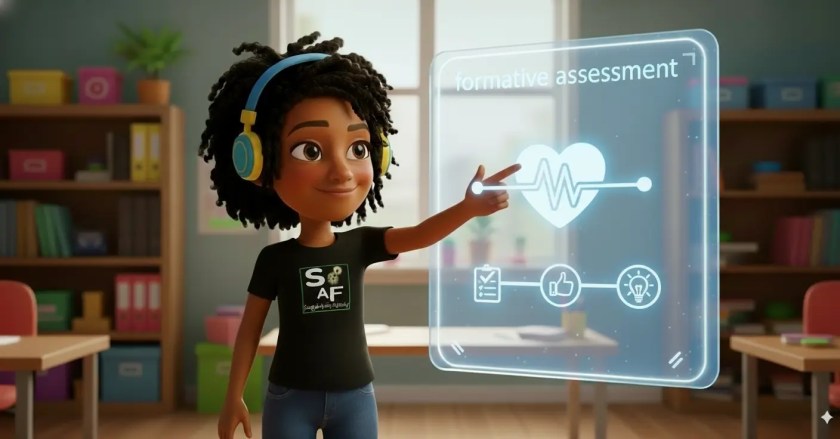
Strategy Insights: 3 Simple Formative Assessment Techniques
- Main Concept: Low-prep formative techniques designed to monitor progress and guide instruction within the BEAT+ Method.
- Key Framework: Three essential tools: The Observation Checklist (Teacher’s X-Ray), The Confidence Pulse-Check (Opinion Poll), and The Learning Snapshot (Exit Ticket).
- Teacher Benefit: Provides actionable data to support students in the moment while maintaining a safe, judgment-free environment for linguistic experimentation.
- Practical Application: Implementing non-verbal “Thumbs” polls to gauge mood comprehension and using one-sentence summaries to distill complex thematic Understanding+.
Let’s be honest about a word that can feel like a heavy cloud in a bright, musical classroom: assessment.
You’ve just had one of those lessons. A fantastic one. Your students were buzzing, laughing, and truly connecting with the language through a great song. The energy was just right.
But then it creeps in, that little question in the back of your mind:
“How do I actually know what they’re learning?”
Assessment Doesn’t Have to Break the Magic
Think of it less as a test and more as a quiet conversation. A check-in. It’s about listening with your teacher’s heart to see what’s clicking and where you might need to offer just a little more support.
The goal? Simply to gather real-time insights to guide your lesson.
Here are three simple, low-prep formative assessment techniques from the BEAT+ Method you can use in your class tomorrow.
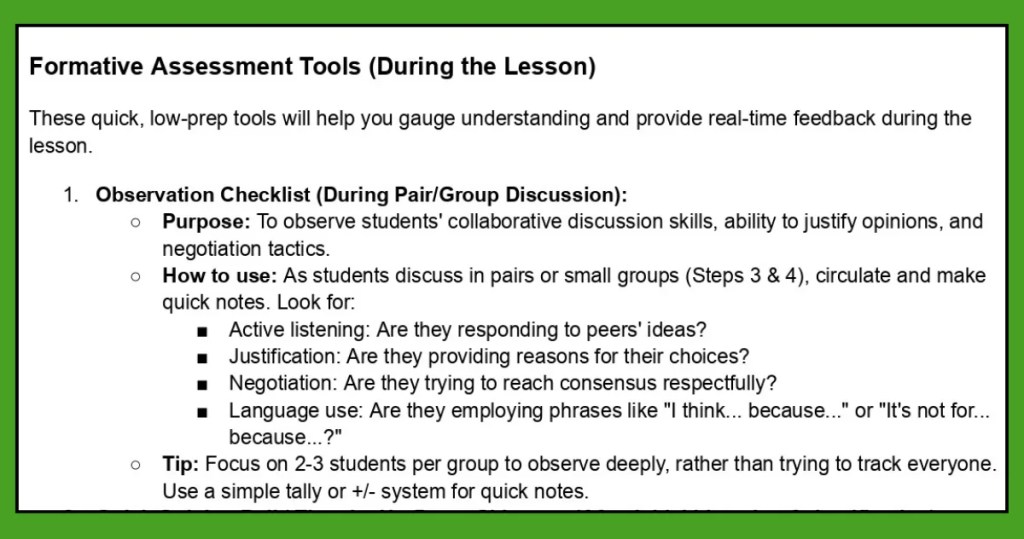
Technique #1: Your Teacher’s X-Ray Vision (The Observation Checklist)
What it is:
Your secret tool for understanding that beautiful, buzzing energy of group work. A simple way to track Interaction+ skills while students collaborate.
How to do it:
- Circulate as students work in groups.
- Listen without interrupting.
- Observe: Are they actively listening? Contributing? Helping each other understand the song?
Done-for-You Example:
For a discussion about a song’s theme, check for:
- Active Listening: Nods, asks follow-up questions.
- Contributing Ideas: Shares interpretations of lyrics.
- Negotiating Meaning: Works with peers to clarify confusing phrases.
- Using Target Language: Applies new vocabulary from the song.
Technique #2: The Confidence Pulse-Check (Quick Opinion Poll)
What it is:
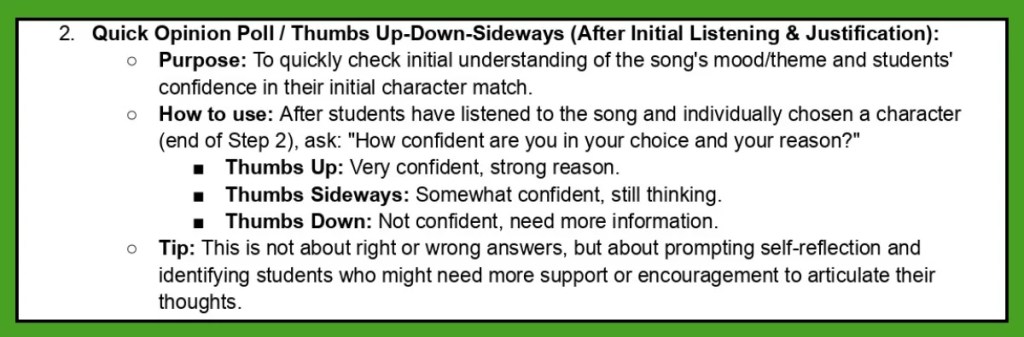
A pulse-check! Super-fast. Non-verbal. It gauges student confidence and understanding after a listening activity.
How to do it:
Use the “Thumbs Up / Sideways / Down” method.
Ask: “How well do you feel you understood the main message or mood of the song?”
- 👍 Thumbs Up: I feel confident I understood.
- 👌 Thumbs Sideways: A little unsure, but I have some ideas.
- 👎 Thumbs Down: Feeling a bit lost.
Why it works:
Creates a safe space for students to self-reflect, while giving you actionable insights for the next step.
Technique #3: The Learning Snapshot (One-Sentence Summary Exit Ticket)
What it is:
A quick, written response at the end of a lesson. Students summarize what they learned in one sentence.
How to do it:
Ask students: “Write one single sentence that explains the main feeling or message of the song.”
- Use sticky notes or scrap paper.
Why it works:
This taps into Understanding+. When a student distills a complex song into a single sentence, it shows what they truly grasped. Quickly collect responses to check class understanding.
Make Assessment Part of the Music 🎵
These techniques make assessment natural, easy, and supportive. You’re not stopping the music to give a test—you’re turning up the volume on your listening, so you can guide your students better.
And these three techniques are just the beginning! Explore the complete framework in my guide:
Beyond the Gap-Fill: How to Meaningfully Assess ESL Learning with Songs
I hope these ideas help you in your teaching life!
Happy teaching!
Author Bio:
About the Author:Márcia Bonfim is an ESL/EFL teacher and creator of the Song Activity Factory. She helps educators create engaging lessons using her signature BEAT+ Method, which features the MUSIC+ Framework. You can discover her complete methodology summary here.
 Song Activity Factory