
Strategy Insights: How to Stop Passive Listening and Make Language Necessary
- Main Concept: Overcoming the music comprehension paradox by turning language from decoration into physical proof of the text’s deeper meaning.
- Key Framework: BEAT+ Method and the MUSIC+ Framework, utilizing tools like a Mystery Dossier visual sequence and a Deduction Menu.
- Teacher Benefit: Functions as a structured system that reduces lesson-prep overwhelm and gives teachers a clearer starting point. The structure is already built so teachers do not spend hours wondering what to do next when planning their song-based lessons.
- Practical Application: Presenting a lyrics text in silence to find written phrases as textual evidence before playing the audio, then using present modals of deduction to solve narrative mysteries.
Welcome to the premiere of ESL Song of the Week: Teaching the Tracks of 2026. I’m Marcia, the creator behind the blog, and if you have ever played a massive pop hit in your classroom only to watch the energy instantly drain from the room the moment you handed out a traditional gap-fill worksheet, this series is for you. Authentic media should not be reduced to a passive dictation test. Let’s get into our first track.
This is Part 1 of a two-part series exploring the underlying structure of song-based lessons. Most B1 listening lessons fail because students just guess the mood from the music. By temporarily withholding the audio track, you can push students to engage with the actual English text, shifting your classroom dynamic from passive listening to evidence-based analysis.
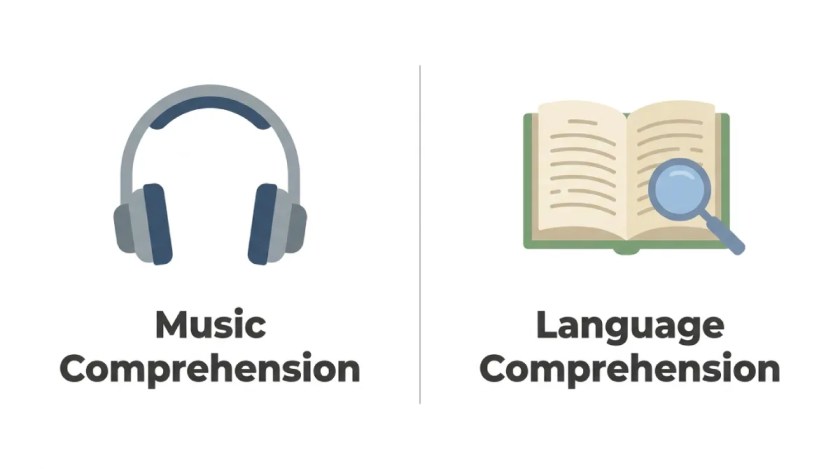
There is a curious paradox at the heart of teaching English through music. We often assume that bringing authentic songs into the classroom automatically creates authentic listening experiences. It does not. In many intermediate classrooms, learners are experts at “feeling” the song without processing the English. They hear a slow acoustic guitar or a melancholy piano line and instantly assume the speaker is dealing with regret, nostalgia, or heartbreak. They follow the emotional direction of a piece perfectly, but they do so without reading the words.
This creates a comfortable illusion for both the teacher and the learner. It looks like listening comprehension, but it is frequently just music comprehension. When we ask a vague question like “How does the singer feel?”, we inadvertently allow students to take the easy way out. They read the vibes, bypass the syntax, and still land on the correct answer.
The Pedagogical Value of Younger You
Miley Cyrus’s Younger You is built around a psychological contradiction: success and regret existing simultaneously. The speaker reflects on the distance between who she imagined becoming and who she eventually became. For B1 learners, this creates unusually fertile ground for interpretation because the emotional conflict is recognizable, but the language expressing it is nuanced and indirect. This balance of narrative tension and target syntax is exactly why it was selected for curriculum mapping this year. By selecting materials based on classroom context and cultural fit, we avoid imported activities that often feel disconnected from students’ real experiences.
Testing a Small Sequencing Adjustment
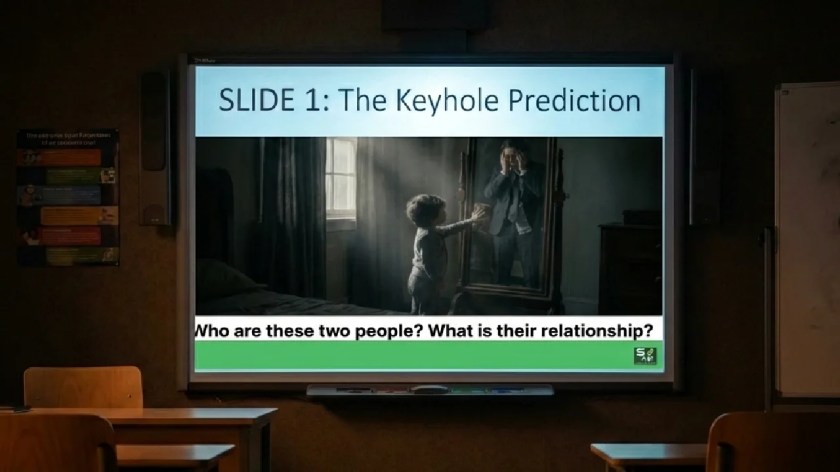
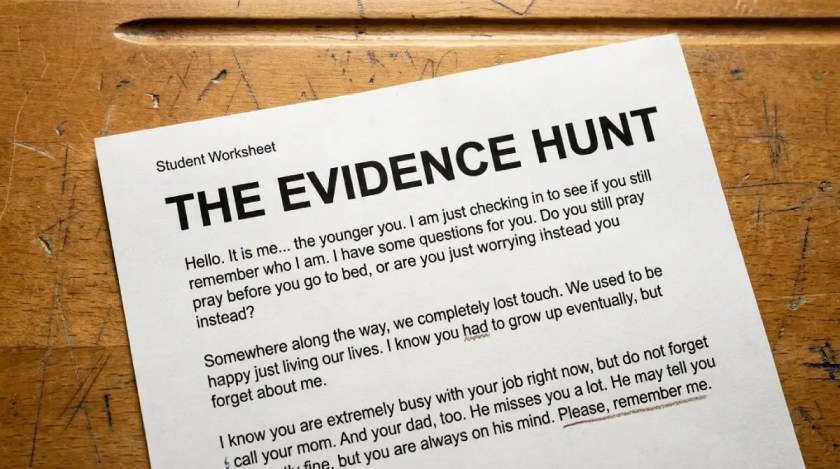
To break this passive loop, we do not need to abandon music altogether. We just need to take the musical shortcut away at the very beginning. In a recent B1 lesson built around Younger You, the opening sequence intentionally withholds the audio layer. Instead of hitting play, the process begins with a stark visual anchor: an image of a child staring into a mirror, catching the reflection of an exhausted adult dressed in formal corporate clothing.
Before the music ever enters the room, students are handed a “Mystery Dossier”—a short prose version of the lyrics, formatted cleanly like an old personal letter. The instruction is direct: read the text in absolute silence and locate exactly three written phrases that serve as physical proof of the writer’s mental state.
Turning Language from Decoration into Evidence
The shift removes the possibility of relying on vague emotional guessing. Because the students can no longer rely on minor chords to do the emotional work for them, they suddenly have to slow down and actually inspect the language. This shift prevents passive listening by giving students a clear, solvable task. Instead of guessing emotionally, they know exactly what they are looking for in the language. The structure is already built, so you do not spend hours wondering what to do next. They cannot guess based on a vocal inflection. They must look at the actual English text, examining vocabulary choices and sentence structures to justify their claims.
The core question transforms from a speculative “How do you think she feels?” into a sharp, evidence-driven “How do you know?”. When the track is finally played later in the hour, the audio no longer serves as an emotional cue. They listen to confirm or challenge the interpretations they already built from the text. They are no longer passive consumers of a vibe. They are listening to test interpretations they already discussed and defended.
Creating a Psychological Curiosity Gap
The real change here is that students stop treating English as a decorative backdrop and start using it to prove a point. A simple pop song stops being background noise and becomes an actual puzzle to solve. If you are constrained by a rigid syllabus and need 20-minute rapid interventions, these puzzles can be integrated quickly.
Grammar instruction often suffers from a structural disconnect. When we want intermediate students to master present modals of deduction like must be, might be, or can’t be, we typically hand them a worksheet filled with isolated sentences. When grammar is stripped of a real purpose, they treat it as a mechanical chore, completely avoiding the exact language of deduction they actually need to practice. The middle phase of the Younger You lesson resolves this disconnect by turning the target grammar into the only logical tool capable of solving a narrative mystery. Instead of merely asking students to guess what happens next, the lesson introduces a structured Deduction Menu. This challenges them to take a stand and commit to a prediction about the writer’s final realization:
Option A (The Pessimist): She must be completely trapped by her current lifestyle. Option B (The Realist): She might be highly successful, but deeply overwhelmed by her choices. Option C (The Skeptic): She can’t be truly happy with who she has become.
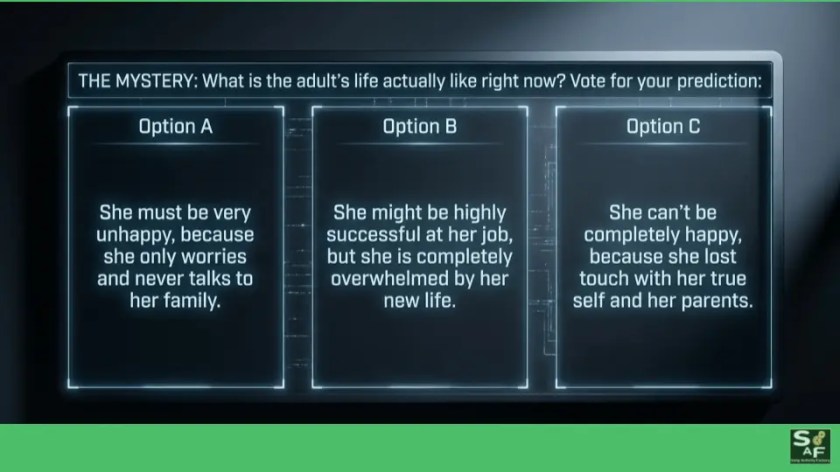
At this point, students are no longer completing a listening exercise. They are using English to defend interpretations, challenge assumptions, and test predictions. The grammar matters because the discussion made it necessary.
This same shift from passive listening into evidence-based deduction also appears in a recent lesson built around Dean Lewis’s I Am Getting Well, where students investigate a musical cliffhanger using past modals of deduction.
Part 2 of this series explores how to move students from this structured grammar analysis into independent production: using peer accountability roles and targeted constraints to push learners to actively use advanced language structures.
About the Author
Márcia Bonfim is an ESL/EFL teacher and the creator of Song Activity Factory. She helps educators design cognitively engaging lessons using her signature BEAT+ Method, built around the MUSIC+ Framework. Her work focuses on transforming songs from “fun extras” into structured learning systems that develop real communicative performance at higher levels. You can discover her complete methodology summary here.


2 comments